What is a Spline-Forming Mold Insert?
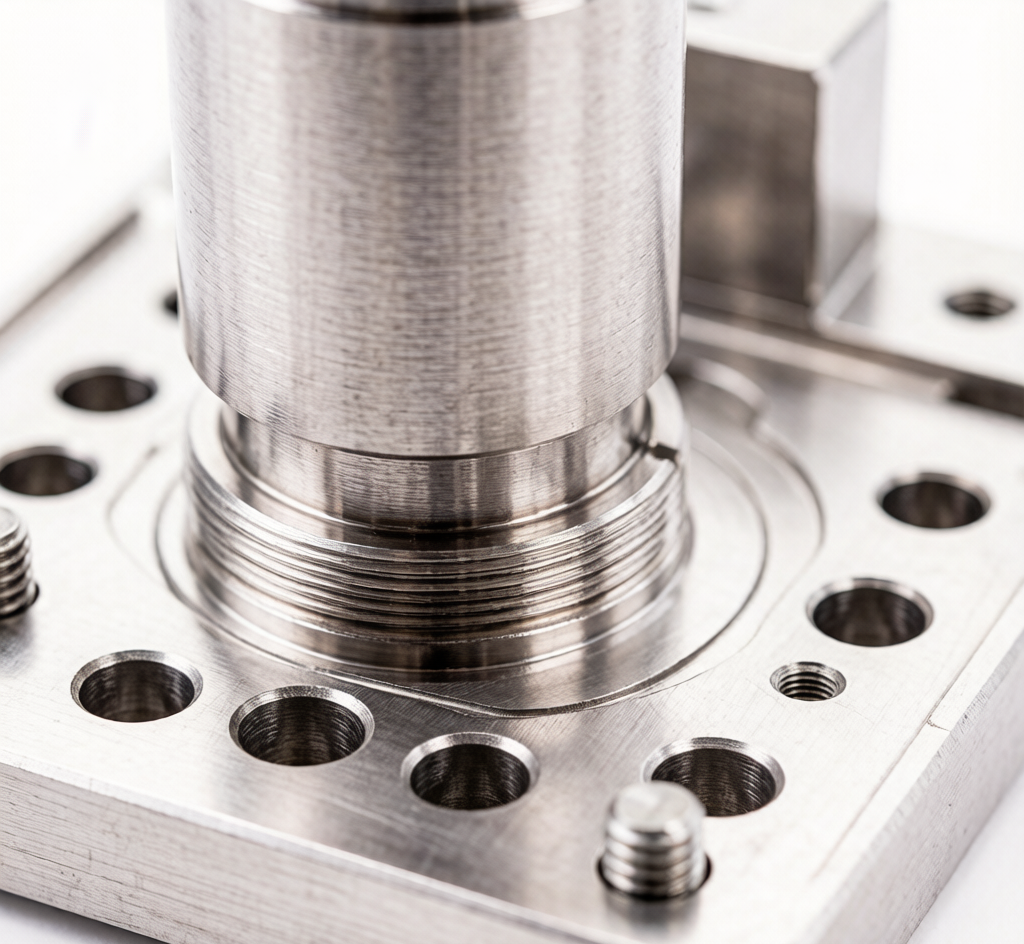
A spline-forming mold insert — also called a gear-tooth insert or spline insert — is a precision mold component used to create internal or external axial teeth, drive lugs, anti-rotation ribs and knurled textures on injection-molded plastic parts. The upper section of the insert carries the exact tooth geometry, while the shank and flange locate and retain it inside the mold plate. When molten plastic fills the cavity, the insert transfers its profile to the part, producing features that transmit torque, improve grip or enable assembly.
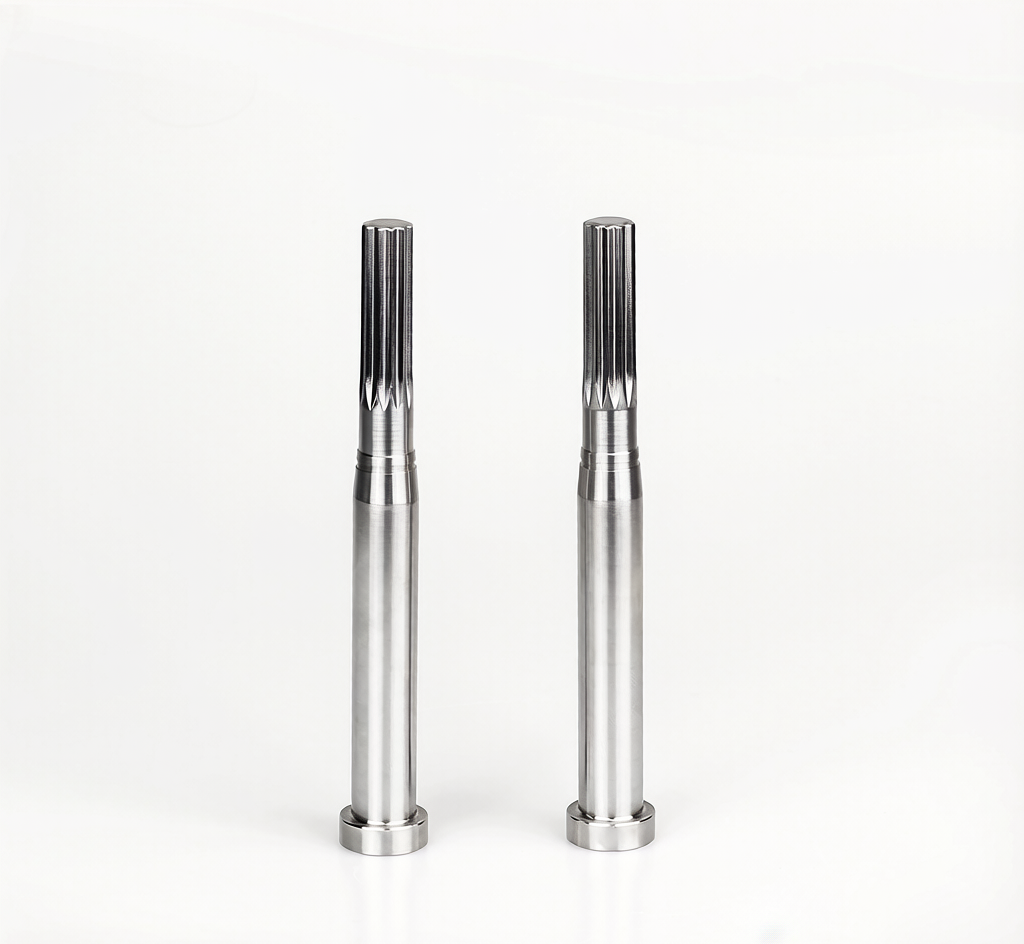
Why Tooth Profile Accuracy Defines Part Function
Plastic gears, pump rotors, dispenser closures and connector housings rely on tooth engagement for motion or torque transfer. A single deviation in tooth spacing, pressure angle or root radius can cause:
- noise, vibration and premature wear in mating assemblies;
- inconsistent torque transmission and slip under load;
- flash at tooth tips or incomplete filling at roots;
- difficult demolding or part sticking if draft angles are wrong.
For these reasons, spline inserts typically demand tooth-to-tooth positional tolerances below ±0.01 mm and surface finishes down to Ra 0.4 µm or finer on the active tooth flanks.
Material and Heat-Treatment Selection
The working environment of the insert determines steel choice. SHENGQI commonly works with:
- SKD61 / H13 — hot-work steel for general injection and elevated cavity temperatures, balanced toughness and heat resistance.
- SKH51 / M2 high-speed steel — selected when abrasive fillers or high cycle counts accelerate tooth-tip wear.
- SKD11 / D2 — cold-work tool steel for high hardness and wear resistance in lower-temperature applications.
- S136 / 420 stainless — corrosion-resistant grades for medical, cosmetic and food-contact molds.
Vacuum heat treatment and precision tempering are used to hit the target hardness without distorting the fine tooth profile. For extreme wear, ion nitriding or PVD coatings can be applied to the tooth surfaces after finish grinding.
Manufacturing Critical Points
Producing a reliable spline insert is not simply a turning job. SHENGQI’s process sequence covers:
- DFM review — verifying draft angle, parting line, shrinkage compensation and ejection plan before cutting steel.
- Turning / grinding — establishing the shank, shoulder and flange to tight coaxiality and perpendicularity.
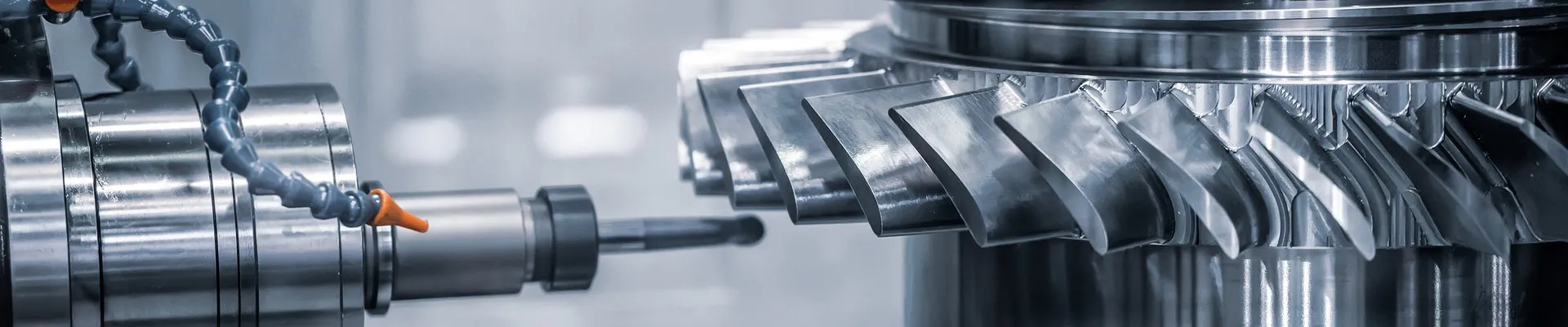
- Tooth generation — wire EDM, profile grinding or specialized hobbing/slotting to form the axial teeth, depending on pitch, depth and quantity.
- Surface finishing — polishing tooth flanks and root radii to reduce plastic adhesion and improve release.
- Final inspection — CMM, profile projector and roughness measurement against the customer drawing.
Typical Applications
- cosmetic lotion pumps and dispenser mechanisms;
- small plastic gears and rotary pump components;
- threaded closures with anti-slip drive features;
- automotive connector inserts requiring rotational alignment;
- power-tool housings and hand-grip knurls.
Why Source Spline Inserts from SHENGQI
With 21+ years of precision mould-component experience, two production bases totaling 40,000 m², 330+ machining centers and ISO 9001 / 13485 / 14001 certification, SHENGQI PRECISION is equipped to deliver custom spline inserts in small-batch, multi-variety mode. Our workflow integrates DFM, mold-flow analysis, material selection, precision machining, vacuum heat treatment and full inspection to reduce tooling risk and shorten lead time.
Need a quote or DFM review? Contact Jason Wong at +86 13652919880 or jasonwong@shengqi.com. Visit www.dgshengqi.com for more about our custom precision mould components.