What Is an Inner Mold Insert?
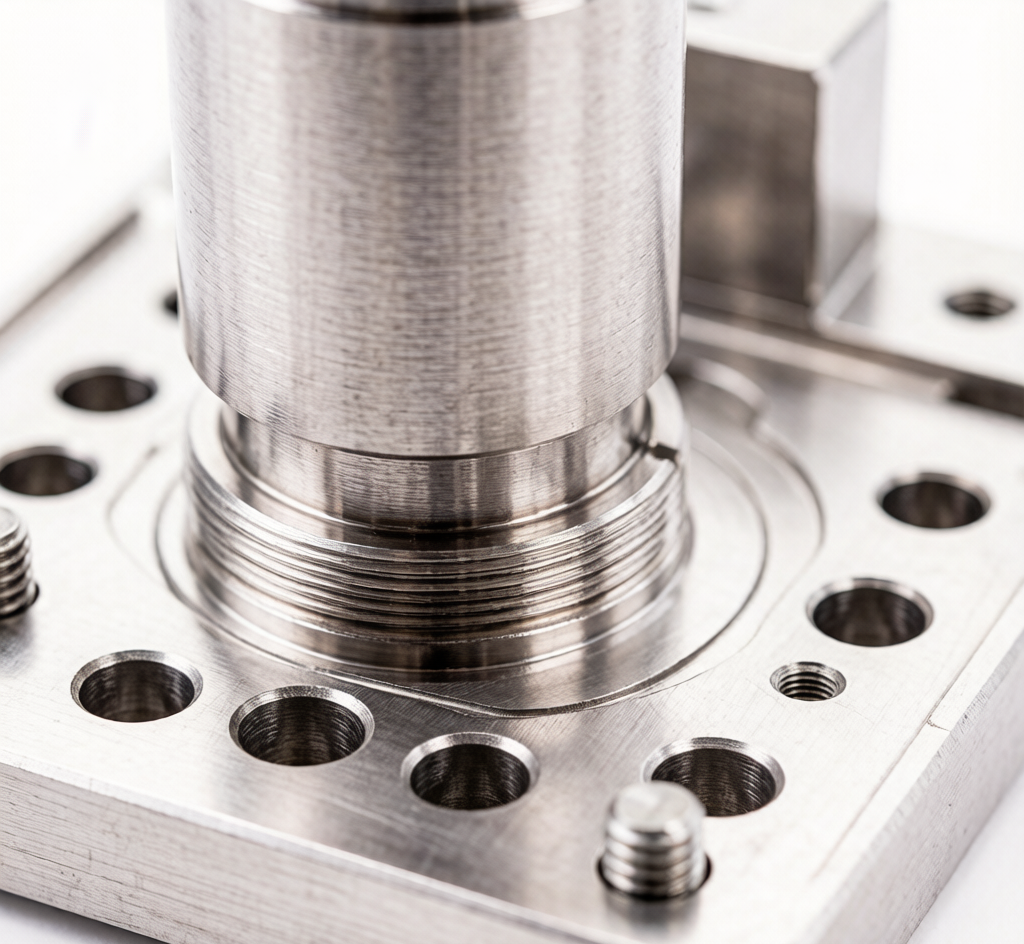
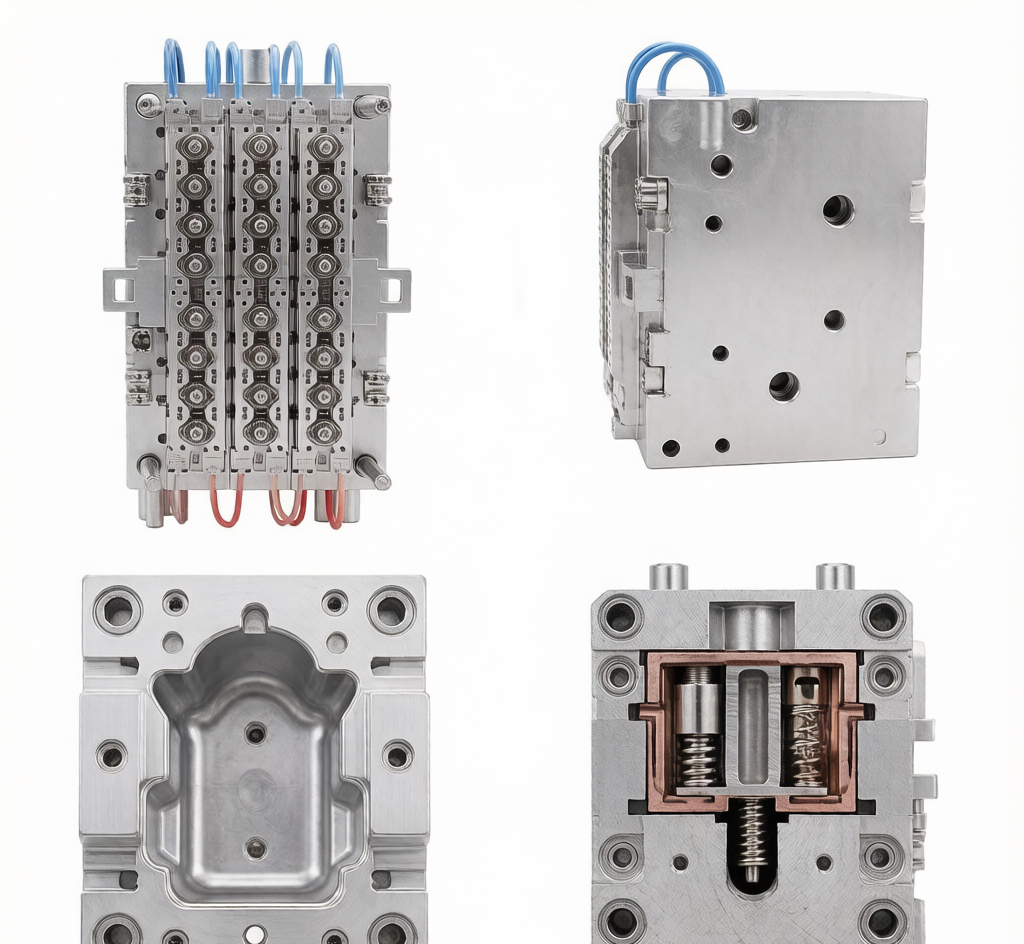
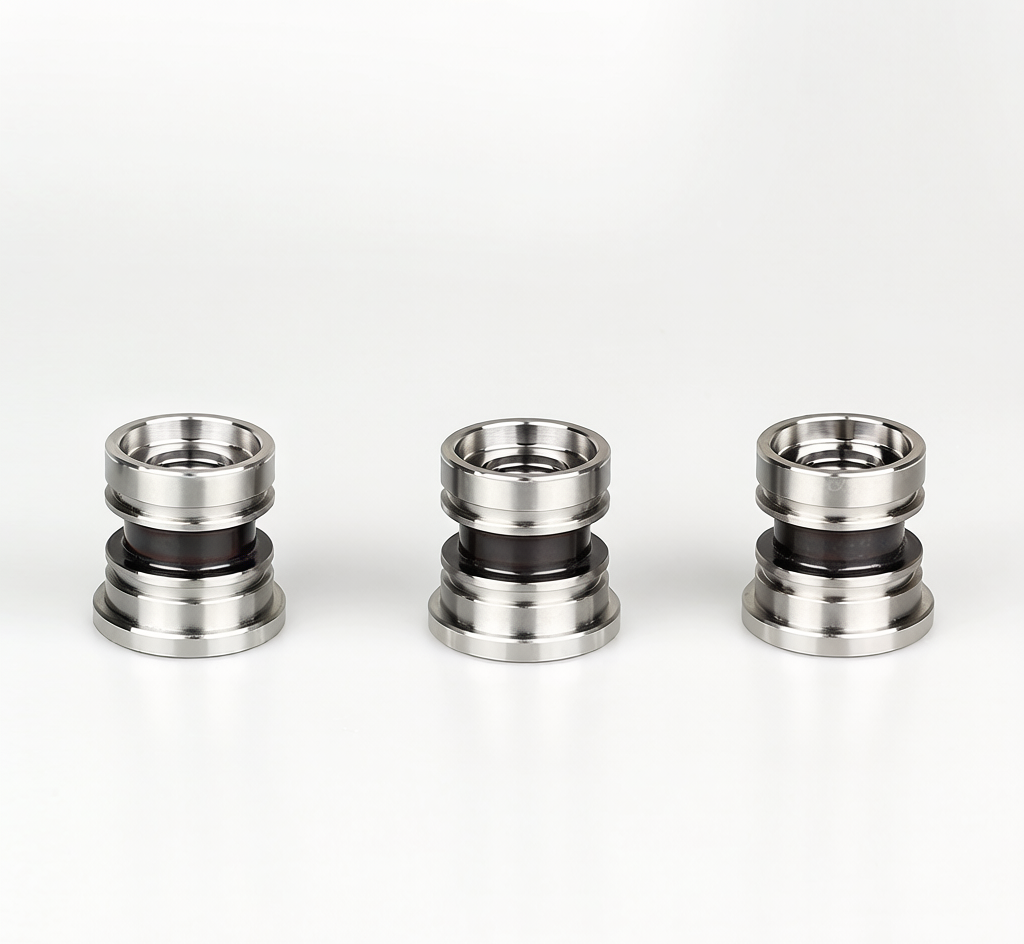
An inner mold insert (Chinese: 内模镶件) is a replaceable precision component embedded into the main cavity or core block of an injection mold. It forms the critical internal geometry of the molded part — thread profiles, undercuts, fine ribs and sealing surfaces that determine both dimensional accuracy and cosmetic quality. Because inserts bear the highest wear concentration in the molding cycle, their design, material choice and machining tolerance directly govern mold lifespan, scrap rate and maintenance interval.
Why Inserts Matter in High-Volume Production
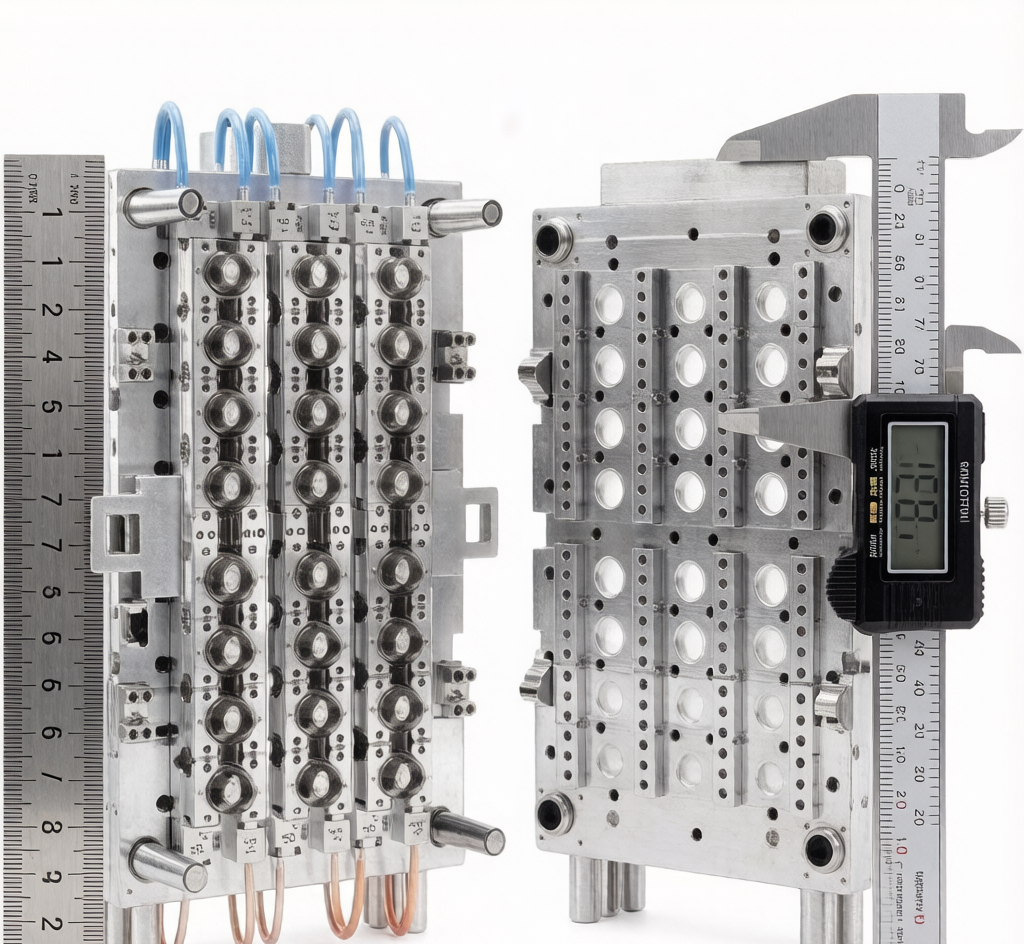
In multi-cavity molds running 24/7 production — cosmetic caps, medical consumables, thin-wall packaging — the cavity surface can experience millions of injection cycles per year. A poorly specified insert leads to early galling, dimension drift or flash formation, forcing unplanned downtime and rework. By contrast, a correctly engineered insert delivers consistent part quality across 500k��1M+ shots with minimal intervention.
- Wear concentration: The insert contacts molten polymer at high pressure and temperature every cycle; this is where 80%+ of cavity wear occurs.
- Replaceability: As a separate component, the insert can be swapped or re-ground without scrapping the entire core/cavity block — a decisive cost advantage.
- Material flexibility: Different inserts within the same mold can use different steels (hardened vs. corrosion-resistant) to match local requirements.
Key Design Parameters
1. Fit Tolerance & Interference
The insert-to-cavity fit is typically designed with a light interference (H7/k6 or H6/js5) to prevent micro-movement under injection pressure. Excessive clearance causes polymer flash between the insert and pocket; excessive interference risks cracking during assembly or thermal expansion. At SHENGQI, target fit tolerance is held within ±0.003 mm on CNC grinding equipment.
2. Steel Selection
Material choice depends on the resin, expected shot count and whether corrosion resistance is required:
| Steel Grade | Typical Application | Key Property |
|---|---|---|
| SKD61 / H13 | General-purpose, high-temp resins (PP, PE, PA) | Toughness + heat-check resistance |
| S136 / 420SS | Corrosive resins (PVC, acetates) or mirror-finish cosmetics | Stainless, polishable to Ra ≤0.02 μm |
| DC53 / SKH51 | High-wear areas, glass-filled engineering plastics | High hardness (58–62 HRC) after heat treatment |
| P20 / 718H | Low-to-medium volume, prototype molds | Pre-hardened, machinable |
3. Surface Treatment Options
Beyond base steel hardness, SHENGQI applies targeted surface treatments to extend insert life:
- Nitriding (TiN/TiCN/PVD): Increases surface hardness to 70+ HRC; reduces adhesive wear with soft polymers.
- Chrome plating: Provides corrosion barrier for PVC or flame-retardant grades.
- Mirror polishing (Ra ≤0.02 μm): Required for transparent parts or Class A cosmetic surfaces; performed on OKAMOTO / PARAGON grinders with in-process roughness monitoring.
Machining Process Flow at SHENGQI
Each inner mold insert follows a controlled process chain:
- DFM review & material certification — Steel mill certificate verified; grain flow direction aligned with load axis.
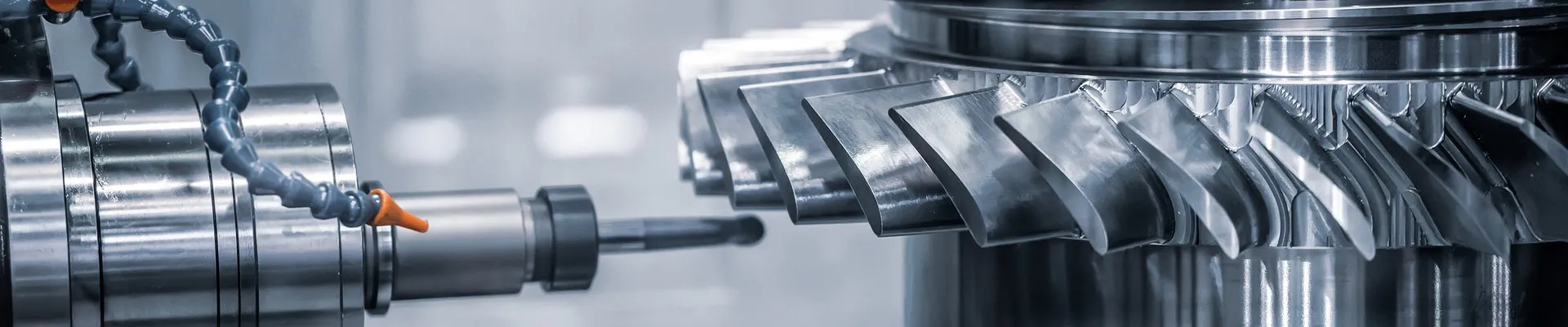
- Rough machining — CNC lathe (TAKISAWA / DOOSAN) or machining center (MAKINO / DMG) leaves 0.3–0.5 mm stock.
- Heat treatment — Vacuum furnace (prevents decarburization); stress-relief tempering after roughing to minimize distortion.
- Precision grinding — OKAMOTO / KENT / PARAGON grinders achieve ±0.001–0.002 mm form tolerance.
- EDM / Wire-cut (if needed) — SODICK mirror-EDM for fine details; CHARMILLES/GF+ wire-cut for sharp internal corners.
- Polishing & texturing — Manual or automated mirror polish; optional EDM texturing for grip patterns.
- Full inspection — CMM (ZEISS / HEXAGON), profile projector (MITUTOYO), roughness tester; 100% dimensional report supplied.
Quality Assurance & Inspection
Every insert leaving SHENGQI’s floor carries a full inspection record:
- CMM 3D scan against original CAD model (deviation map included).
- Roundness / concentricity measured on dedicated roundness tester (±0.0001 mm repeatability).
- Surface roughness verified per drawing specification (Ra 0.02–0.4 μm range typical).
- Material hardness tested at 3+ points post heat-treatment.
This level of traceability is especially critical for medical mold inserts (ISO 13485 certified environment) and automotive die-casting cores where PPAP documentation may be required.
Common Failure Modes & How SHENGQI Addresses Them
| Failure Mode | Cause | Prevention |
|---|---|---|
| Heat checking (surface cracks) | Thermal fatigue from cycling | Proper steel grade + nitriding; avoid sharp internal corners (R ≥0.3 mm) |
| Galling / adhesive wear | Soft steel against abrasive resin | PVD coating increase surface hardness; polish perpendicular to draw direction |
| Dimensional drift | Insert loosening in pocket | Controlled interference fit + shoulder locking design |
| Corrosion pitting | Hydrolysis from PVC or flame retardants | S136 stainless steel or chrome plating |
| Edge chipping | Ejection impact or handling damage | Draft angle ≥0.5° on all vertical walls; proper ejector layout |
When to Replace vs. Re-grind an Insert
A well-designed insert can typically be re-ground 2–3 times before the reduced wall thickness compromises structural rigidity. Decision criteria include:
- Remaining stock above minimum wall thickness (usually ≥3 mm from cavity surface to cooling channel).
- No deep heat-checking cracks visible at 30× magnification.
- Thread profile or sealing surface still within tolerance after planned stock removal.
SHENGQI offers both replacement inserts (from-scratch manufacture matching original spec) and re-grinding service (restore worn inserts to print) with fast turnaround — typically 5–10 working days depending on complexity.
About SHENGQI PRECISION
Dongguan Shengqi Precision Mould Components Co., Ltd. (SHENGQI PRECISION) has specialized in custom non-standard precision mould components for over 21 years. With two production bases in Dongguan and Huangshi (40,000 m² total), 330+ machining centers and a team of 380+ engineers and technicians, SHENGQI provides end-to-end solutions covering DFM, moldflow analysis, material selection, precision machining, surface treatment and full inspection. Certified to ISO 9001:2015, ISO 13485 (medical devices) and ISO 14001, SHENGQI supplies international-standard components compatible with MISUMI, DME, HASCO and FIBRO systems.
Contact: Jason Wong | Tel: +86 13652919880 | Email: jasonwong@shengqi.com | Web: www.dgshengqi.com