Introduction: A Cap’s Thread Is a Small Precision System
Behind every screw-close cap is a coordinated set of mould components: the threaded core (螺牙型芯) that forms the internal thread, the rifling rod / helical rod (来福杆) that adds anti-slip striations, and the helical bronze bushing (来福线铜套) that guides and rotates the core. Getting them to work together is the difference between a cap that seals cleanly and one that cross-threads.
This article explains how the system fits together.
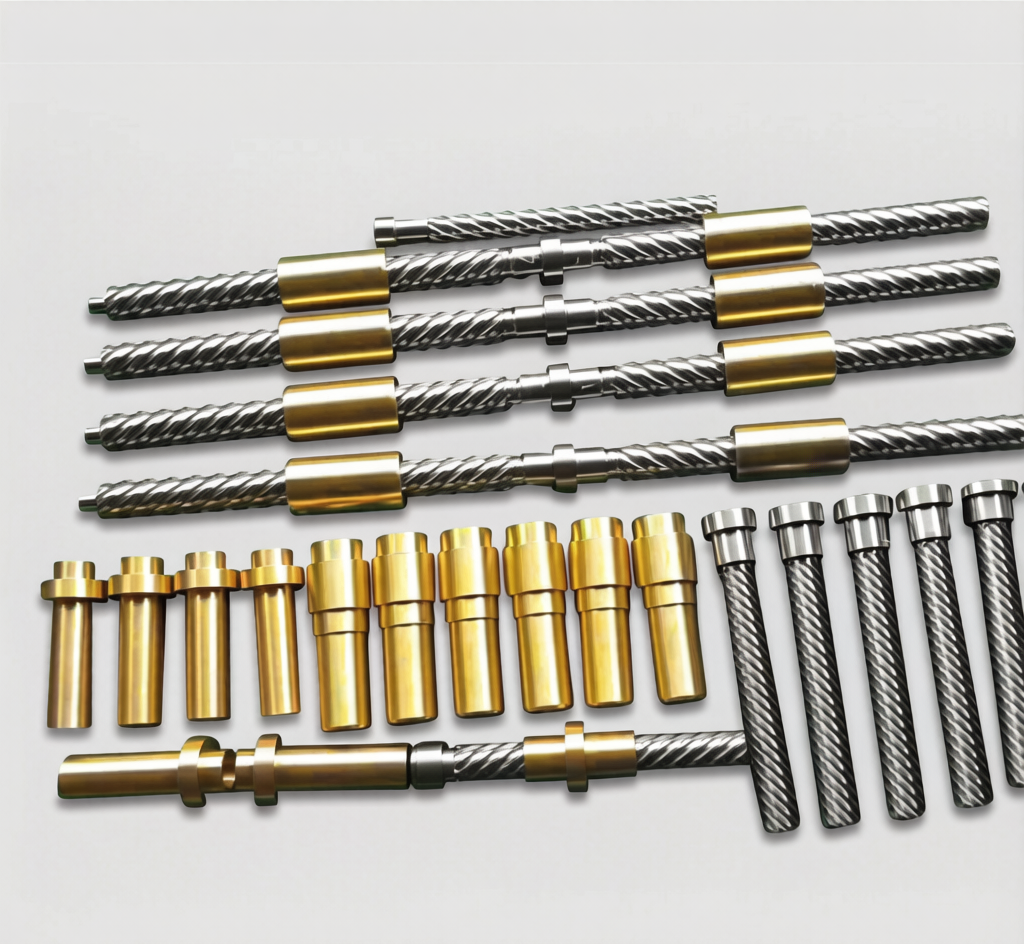
1. The Threaded Core
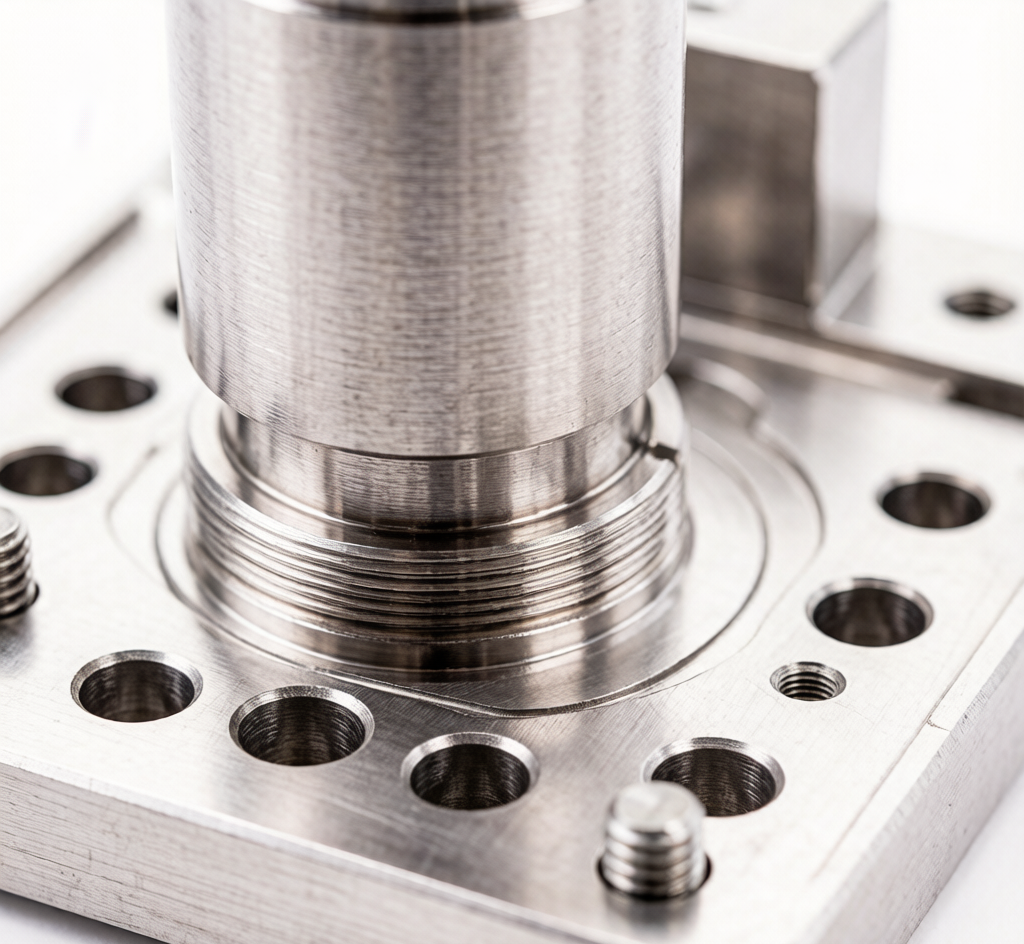
The screw-thread core is the heart of the system. It must release the moulded thread without scoring it, so its geometry, surface finish and unscrewing motion are critical. Cores are usually SKD61 / S136, precision-ground to ±0.002 mm, often with a Ti-coating to reduce friction and wear.
2. The Rifling Rod (来福杆)
In many closures the inner wall carries fine anti-slip striations — the rifling rod forms them. Its helical feature must match the core’s rotation so the striations align with the thread, not against it. Tight concentricity between rod and core avoids asymmetric marks.
3. The Helical Bronze Bushing (来福线铜套)
The helical bronze bushing sits in the mould plate and guides the rotating core, absorbing side load and wear. Bronze is chosen for its self-lubricating, wear-resistant properties; the helical internal profile lets the core both slide and rotate smoothly during unscrewing.
4. Why Tolerances and Materials Decide Success
Concentricity between core, rod and bushing, plus consistent heat treatment, determines thread quality and tool life. SHENGQI PRECISION controls these with precision grinding to ±0.002 mm, vacuum heat treatment and CMM verification, backed by 21+ years of non-standard experience, two bases (Dongguan + Huangshi, 40,000 m²), 330+ machines and ISO 9001 / 14001 certification.
Specifying a cap thread forming system (threaded core + rifling rod + helical bronze bushing)? Contact SHENGQI PRECISION — Jason Wong, +86 13652919880, jasonwong@shengqi.com, www.dgshengqi.com.