What Is an Engraved Cavity Insert?
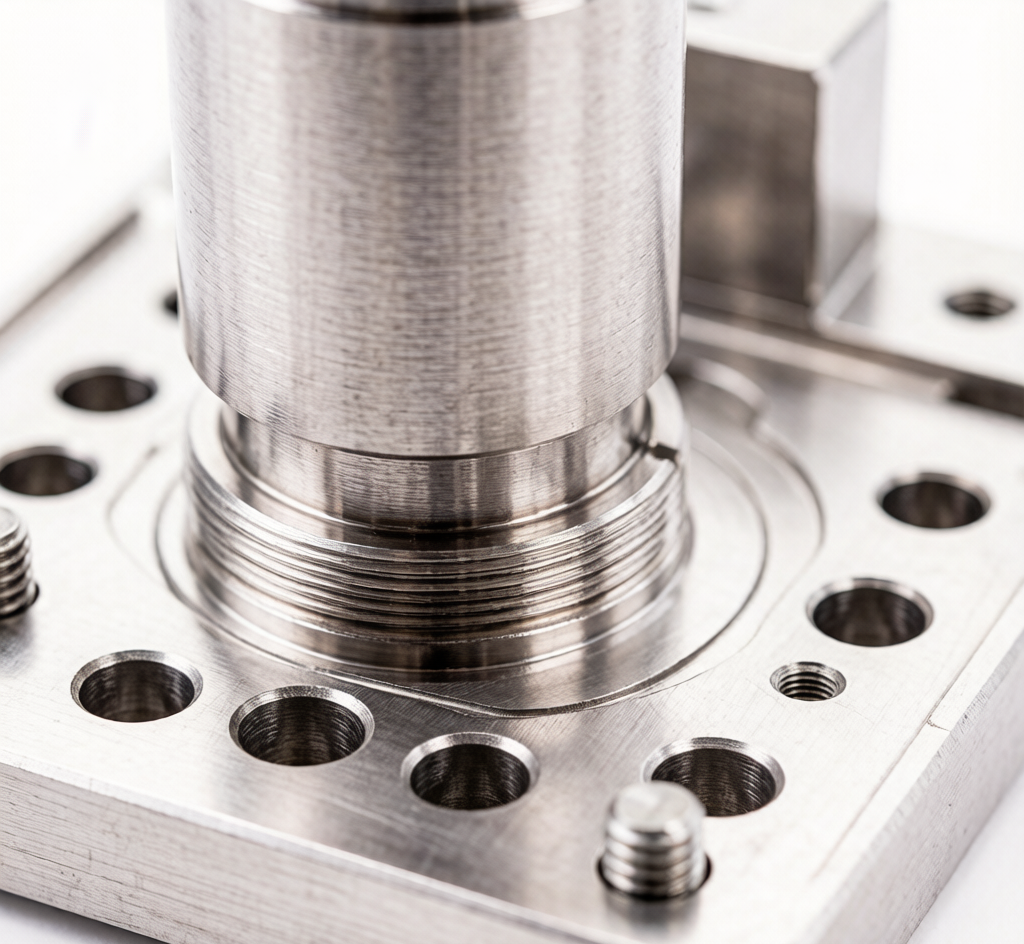
An engraved cavity insert (雕花模仁) is the precision-machined mold component that forms the decorative or branding surface on cosmetic packaging parts such as tube shoulders, tube bottoms and cap tops. The insert shown here is a cylindrical cavity insert with a stepped outer profile and a mirror-polished end face carrying a custom three-petal swirl pattern. In production, this face contacts the molten plastic and transfers the pattern directly onto the finished part, making the insert both a functional molding tool and a cosmetic-quality determinant.
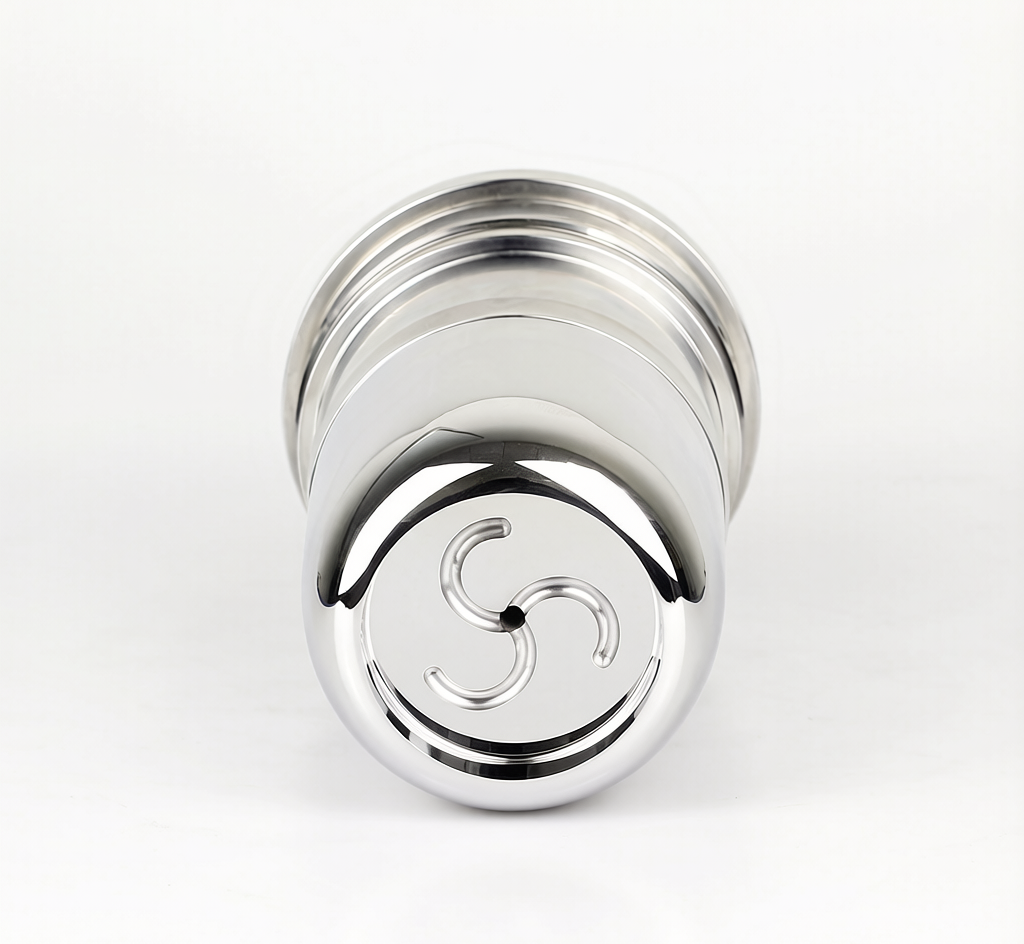
Why Pattern Design Matters in Cosmetic Packaging
Cosmetic brands rely on packaging appearance to communicate identity. A raised logo, textured motif or embossed pattern on a tube or cap becomes part of the product signature. For the moldmaker, this means the cavity insert must deliver three things simultaneously:
- Pattern fidelity: Fine engraving lines must reproduce sharply without rounding, burrs or flash.
- Optical surface quality: Visible surfaces demand SPI A-2 / A-3 or equivalent mirror finishes so the final part looks premium.
- Durability: The insert must resist abrasive wear from filled resins, chemical attack from fragrance or skincare additives, and repeated clamping cycles.
When any one of these fails, the result is part rejection, mold downtime or expensive insert replacement.
Key Geometry and Tolerance Parameters
| Parameter | Typical Specification | Why It Matters |
|---|---|---|
| Pattern depth | 0.05 – 0.30 mm | Controls visual relief without causing ejection problems |
| Draft angle on raised features | ≥ 1.5° per side | Permits clean release and prevents pattern distortion |
| Surface roughness | Ra 0.012 – 0.025 μm | Delivers mirror reflection on visible cosmetic surfaces |
| Diameter tolerance | ±0.005 mm | Ensures concentricity with mating mold components |
| Hardness after treatment | 48 – 52 HRC (P20/718H) or 48 – 52 HRC (S136) | Balances machinability with wear resistance |
These figures are not universal; SHENGQI reviews each customer’s resin type, part geometry and production volume before finalizing the insert specification.
Material Selection and Heat Treatment
For cosmetic packaging inserts, material choice depends on whether the visible surface is transparent, translucent or opaque and whether the resin contains abrasives:
- P20 / 718H pre-hardened steel: Cost-effective for medium-volume production; stable after pre-hardening, easy to machine and polish.
- S136 / 420SS stainless steel: Preferred for corrosive resins, clear parts or medical/cosmetic applications requiring rust resistance and mirror polishability.
- SKD61 / H13: Used when the insert operates at higher temperatures or where thermal fatigue is a concern.
Vacuum heat treatment and stress-relief tempering are applied to minimize distortion after engraving and polishing, preserving the micron-level pattern accuracy.
Manufacturing Process at SHENGQI
SHENGQI produces engraved cavity inserts through a controlled multi-step workflow:
- DFM and pattern review: Customer artwork is checked for manufacturability, draft angles and ejection feasibility.
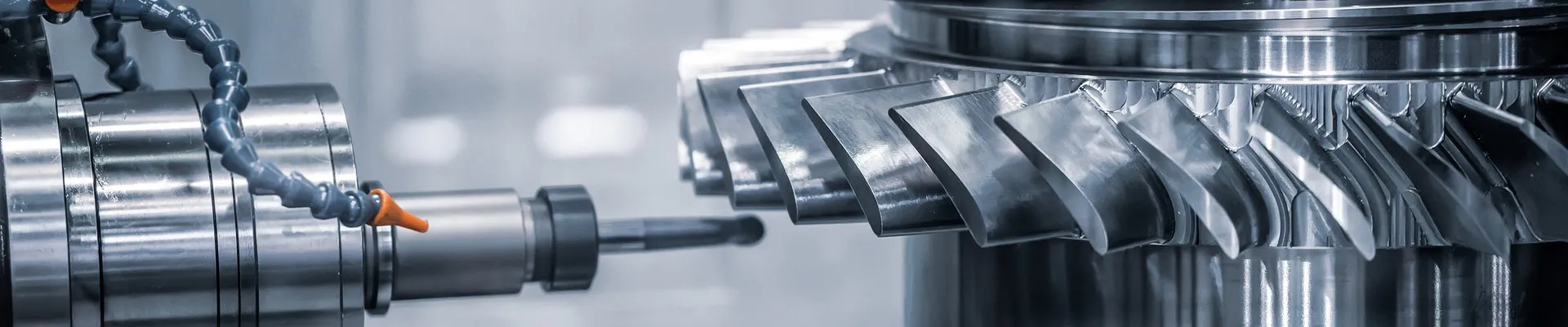
- CNC roughing and semi-finishing: MAKINO/JINGDIAO machining centers shape the stepped profile to within ±0.005 mm.
- Precision engraving / texturing: SODICK mirror EDM or chemical etching transfers the pattern into the hardened steel.
- Mirror polishing: Hand polishing and diamond finishing bring the non-pattern surfaces to SPI A-2/A-3 quality.
- Dimensional and cosmetic inspection: ZEISS CMM, optical comparators and visual checks under controlled lighting.
This process ensures that the decorative face remains consistent across thousands of molding cycles.
Surface Finish and Wear Resistance
The mirror finish on the engraved face is not only cosmetic. A smooth surface reduces friction during ejection, lowers residue adhesion and extends cleaning intervals. For abrasive resins, SHENGQI can apply surface hardening or specialized coatings to raise wear resistance without altering the pattern dimensions.
Quality Inspection
Every engraved cavity insert leaves SHENGQI’s inspection center only after verification of:
- Pattern completeness and edge sharpness
- Surface roughness (Ra measurement)
- Cavity diameter, concentricity and stack height
- Hardness after heat treatment
SHENGQI Precision Manufacturing Advantage
Dongguan Shengqi Precision Mould Components Co., Ltd. (SHENGQI PRECISION) has specialized in custom non-standard precision mould components for more than 21 years. With two production bases covering 40,000 m², 330+ machining centers and certifications including ISO 9001:2015, ISO 13485 and ISO 14001, SHENGQI delivers one-stop support from DFM and material selection through precision machining, surface treatment and full inspection.
For engraved cavity inserts used in cosmetic packaging molds, SHENGQI combines high-speed CNC, mirror EDM and hand polishing to reproduce complex patterns with repeatable cosmetic quality.
Contact: Jason Wong, +86 13652919880, jasonwong@shengqi.com, www.dgshengqi.com