What the Image Shows
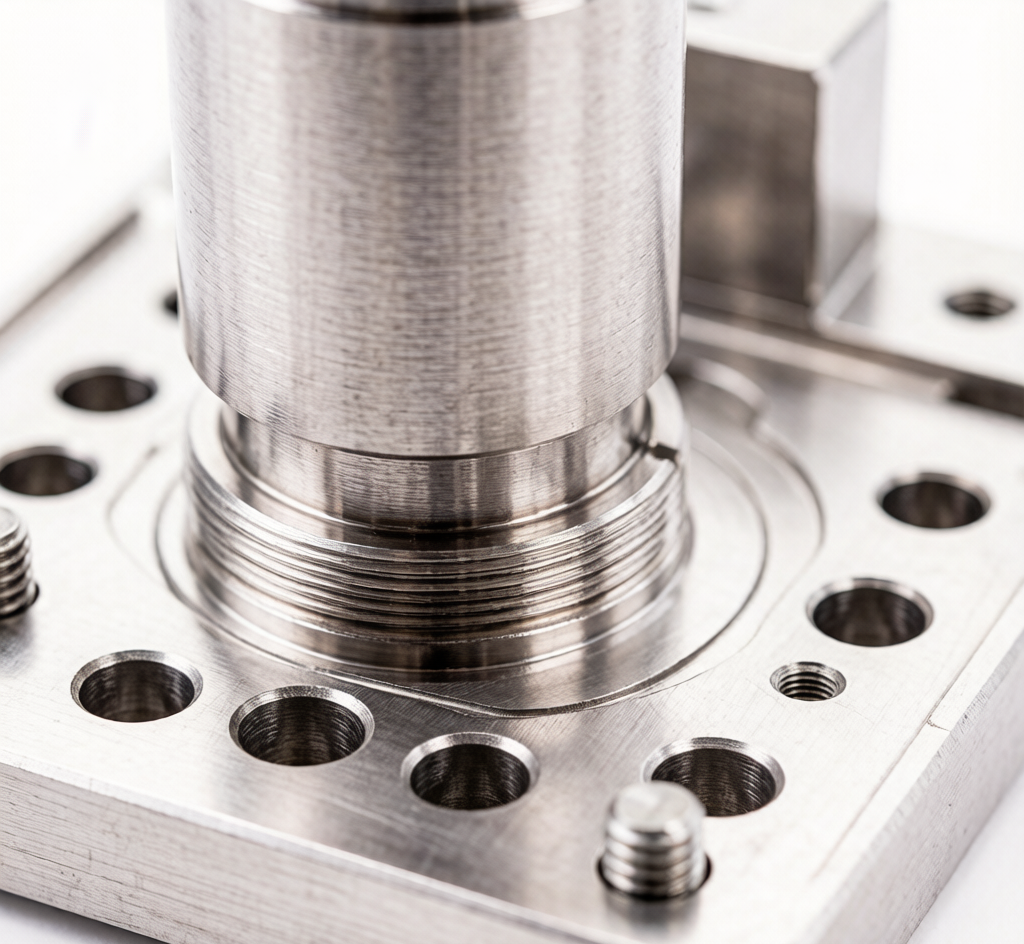
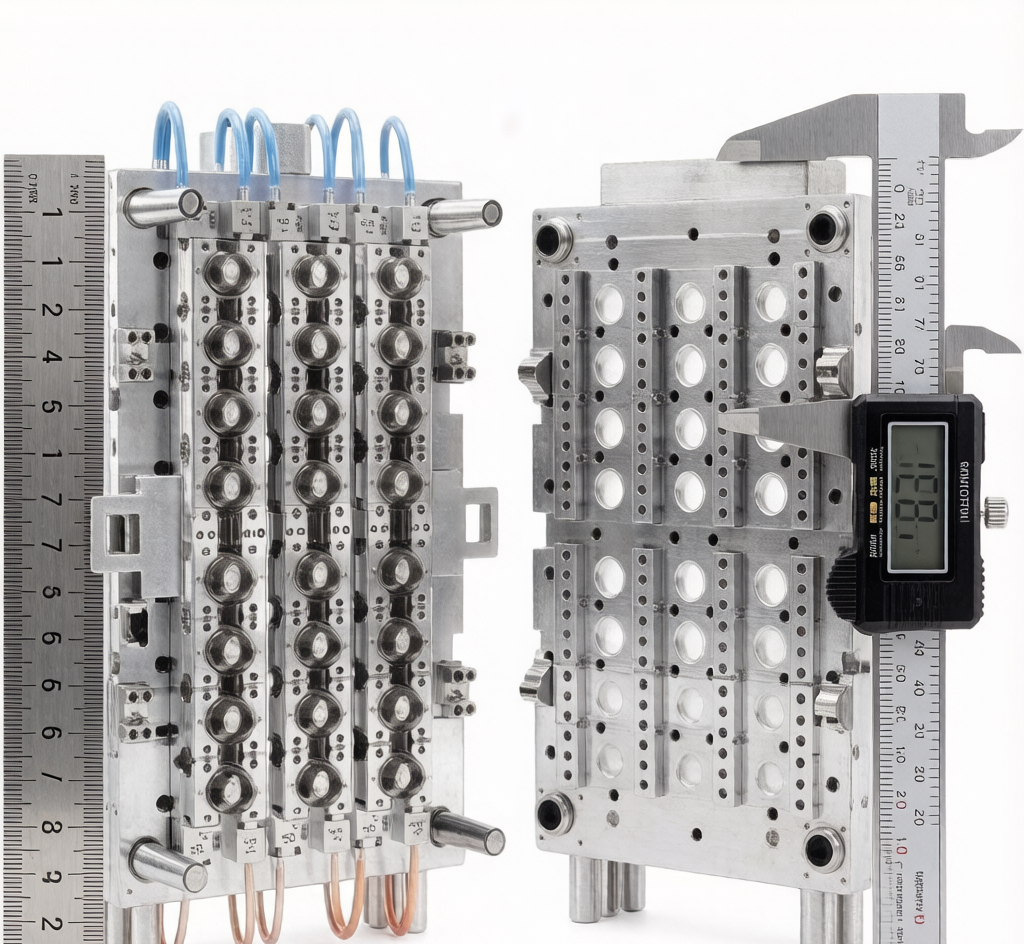
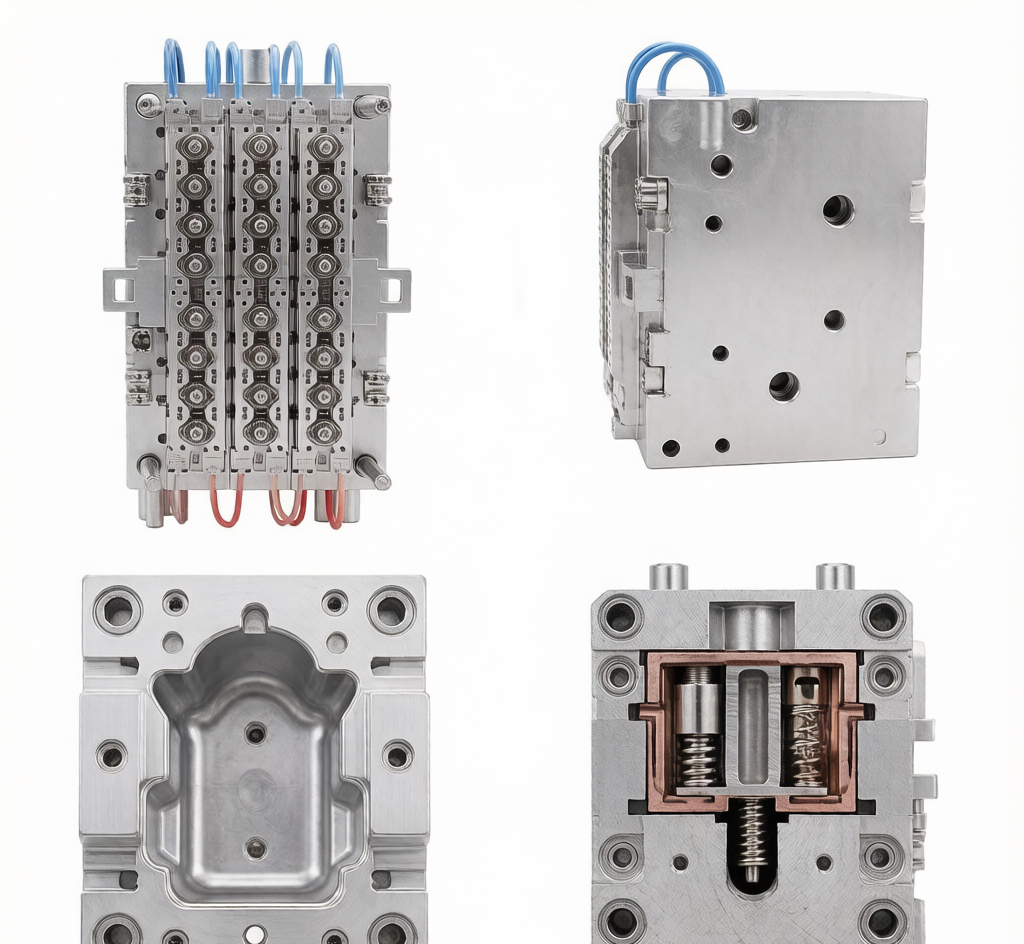
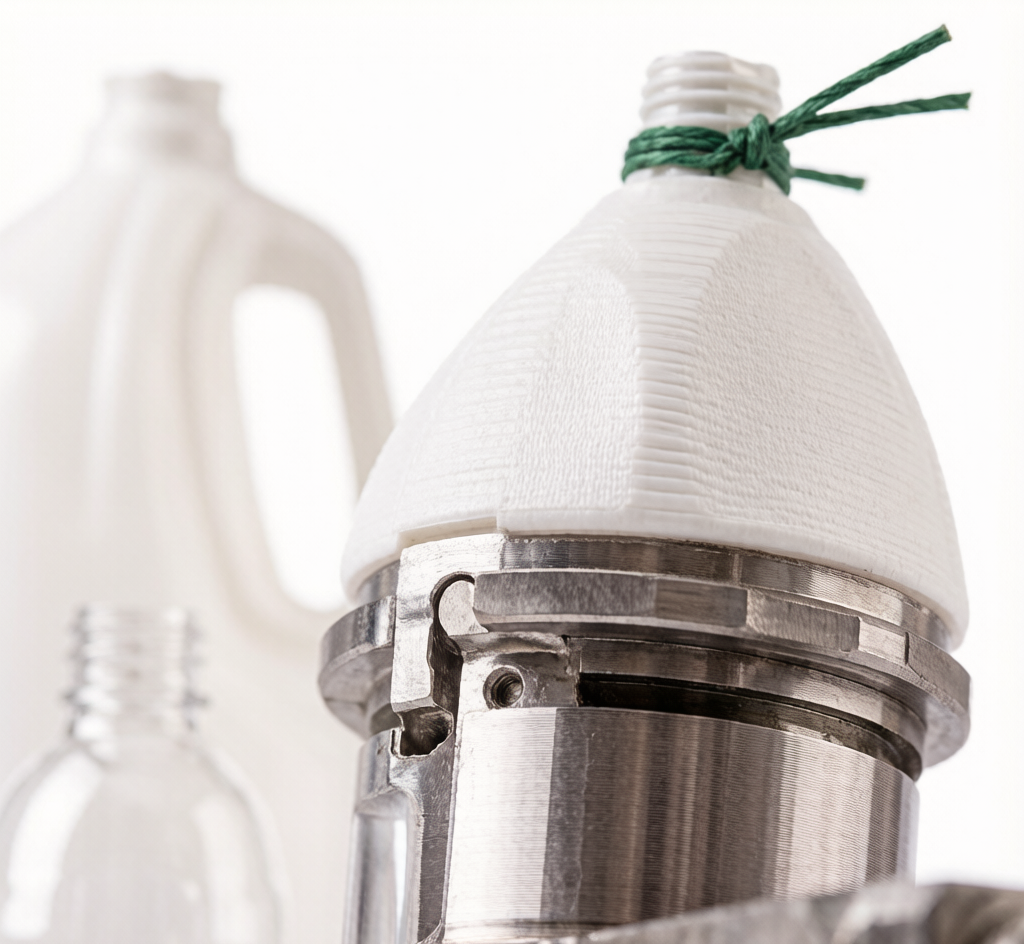
This macro photograph captures the cavity detail of a blow mold (吹瓶模具) used to produce large plastic bottles. In the foreground, a white HDPE or PET jug is seated on the metallic blow mold cavity, revealing the precision-machined parting line, neck-finish seating area and mirror-finished cavity surfaces that directly shape the container. The green twist tie around the bottle neck is a production-line marker; the blurred bottles in the background confirm this is a real food-packaging production environment.
Why Blow Mold Cavity Quality Controls Bottle Consistency
In extrusion or injection stretch blow molding, the mold cavity does not merely define the bottle shape. It controls wall-thickness distribution, neck-finish dimensional accuracy, surface aesthetics and, ultimately, the container’s ability to seal, stack and survive distribution. A cavity that is even slightly out of tolerance can cause:
- Wall-thickness variation leading to weak corners or top-load failure.
- Parting-line flash that requires costly trimming or leak testing rejects.
- Neck-finish mismatch with caps, causing seal failure in filling lines.
- Poor surface finish that traps labels or reduces shelf appeal.
For food-grade packaging, these defects translate directly into scrap, line stoppages and compliance risk.
Key Design Elements Visible in the Cavity Detail
| Feature | Function | Typical Tolerance |
|---|---|---|
| Parting line | Defines mold split and flash control | Flash ≤ 0.05 mm |
| Neck finish seat | Locates preform and forms threads/collar | ±0.02 mm |
| Cavity surface | Determines bottle gloss and release | Ra 0.025–0.05 μm |
| Venting grooves | Permits air escape during blowing | 0.02–0.05 mm deep |
Material and Cooling Considerations
Blow molds for high-volume food packaging are typically built from P20/718H pre-hardened steel or S136/420SS stainless steel when corrosion resistance is required. Aluminum is sometimes used for prototype or low-pressure applications, but steel dominates in long-run production.
Cooling channel layout is equally important. Uniform cavity cooling prevents warping and crystallinity gradients in PET, while minimizing cycle time. At SHENGQI, mold plates and cavity inserts are machined with deep-hole drilling and gun-drilled circuits before final grinding and assembly.
Manufacturing Workflow at SHENGQI
SHENGQI PRECISION produces blow mold cavities and related inserts through a controlled workflow:
- DFM review: Preform geometry, bottle volume and material shrinkage are evaluated before steel is cut.
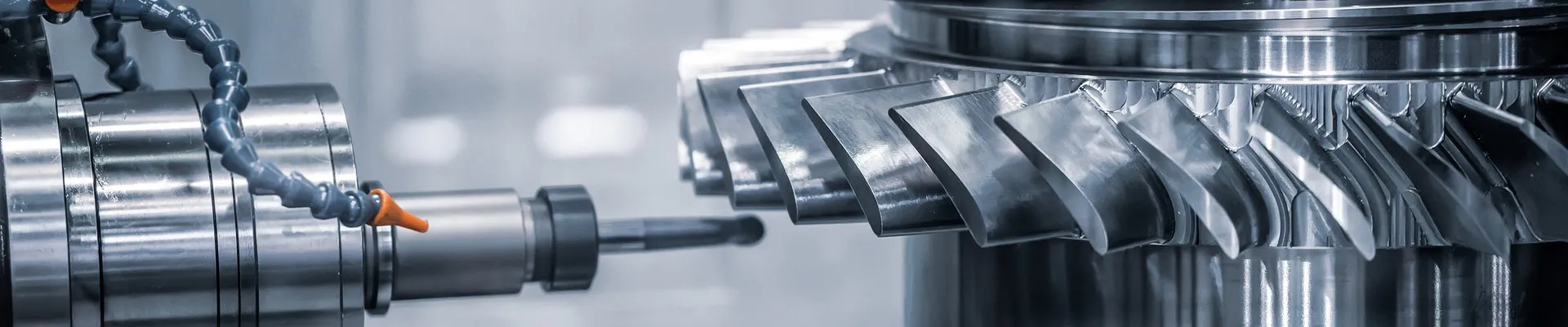
- CNC roughing and finishing: MAKINO/JINGDIAO centers shape cavity profiles to within ±0.005 mm.
- Mirror EDM and polishing: SODICK EDM and hand polishing achieve food-grade surface finishes.
- CMM verification: ZEISS/HEXAGON CMMs check neck finish, parting line and cavity symmetry.
- Assembly and trial: Cavity sets are fitted to customer mold bases for first-article approval.
One-Stop Custom Mold Component Supply
With 21+ years of experience, two production bases totaling 40,000 m², 330+ machining centers and ISO 9001/13485/14001 certifications, SHENGQI PRECISION supports international buyers from DFM through full inspection. Whether you need a single cavity insert, a complete blow mold set or replacement components compatible with existing production lines, our team can match your drawing, material and delivery requirements.
Contact Jason Wong at +86 13652919880 or jasonwong@shengqi.com. Visit www.dgshengqi.com for more about our precision mould components.