What a Helical Bronze Bushing Does in a Cap Mold
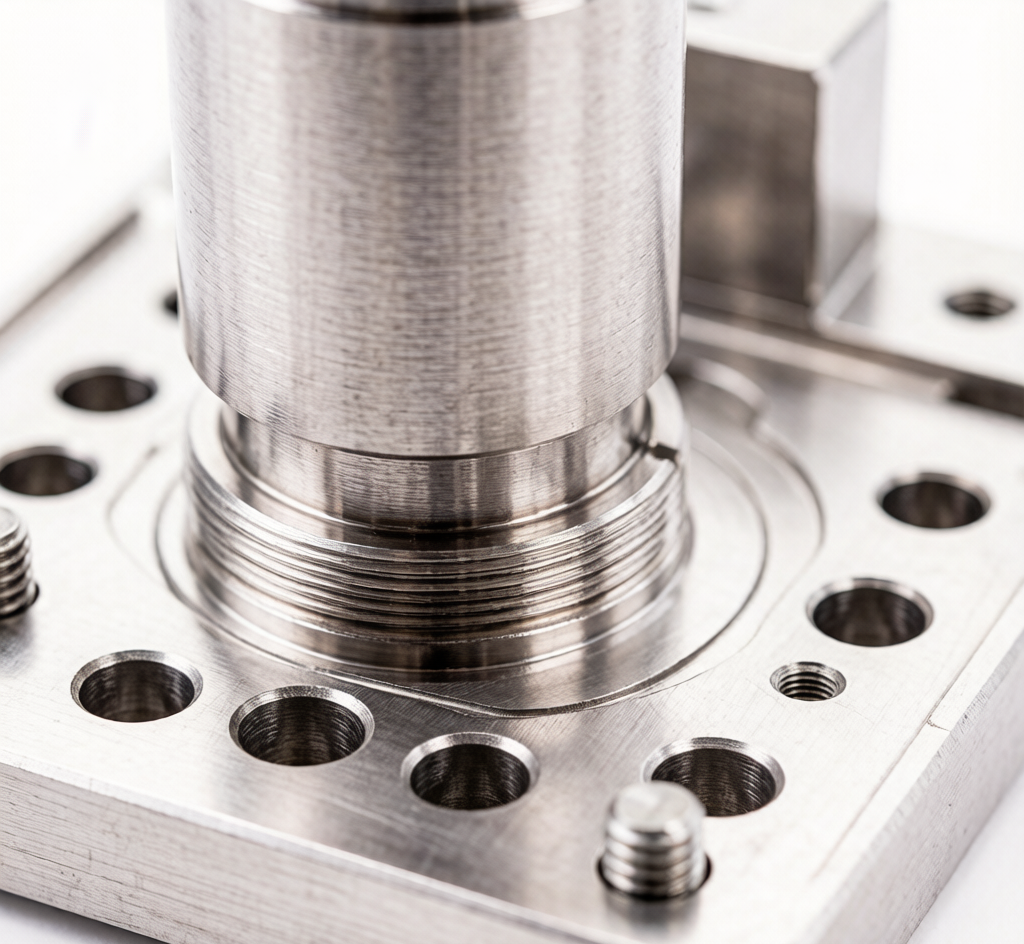
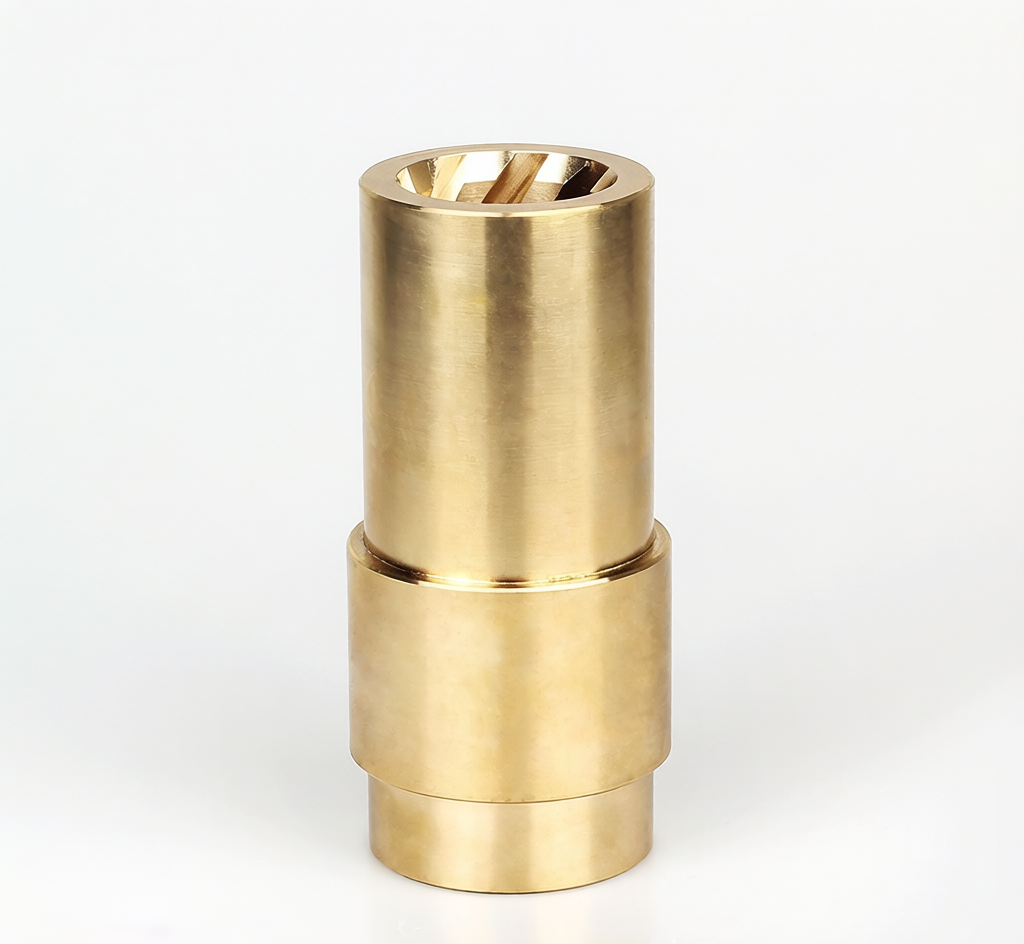
The helical bronze bushing (来福线铜套) is the motion-conversion component inside an unscrewing cap mold. Its inner bore is cut with a multi-start helical groove that engages a rifling rod or drive pin on the rotating screw-thread core. During mold opening, the ejector plate moves axially; the helical path forces the core to rotate, so the molded cap threads can back out smoothly without manual unscrewing or thread damage.
Why Bronze? Material Selection for the Rifled Bushing
Bronze—not steel—is the standard choice here for three reasons. First, its low coefficient of friction against hardened tool steel reduces galling under repeated rotation. Second, bronze dissipates heat quickly, keeping the interface stable across millions of cycles. Third, it is softer than the mating core and rod, so normal wear is localized in the replaceable bushing rather than the more expensive core. SHENGQI typically uses aluminum-bronze or tin-bronze grades selected to match the customer’s cycle speed and cap material.
Helix Geometry That Controls Unscrewing Kinematics
Three geometric parameters determine performance:
- Lead / pitch — defines how many millimeters of axial stroke produce one full rotation. A mismatched lead causes incomplete unscrewing or over-rotation.
- Helix angle — must balance mechanical advantage with ejector speed; too steep raises torque and wear, too shallow lengthens cycle time.
- Groove profile and surface finish — a polished groove surface (Ra ≤ 0.4 µm is common) reduces stick-slip and particle build-up.
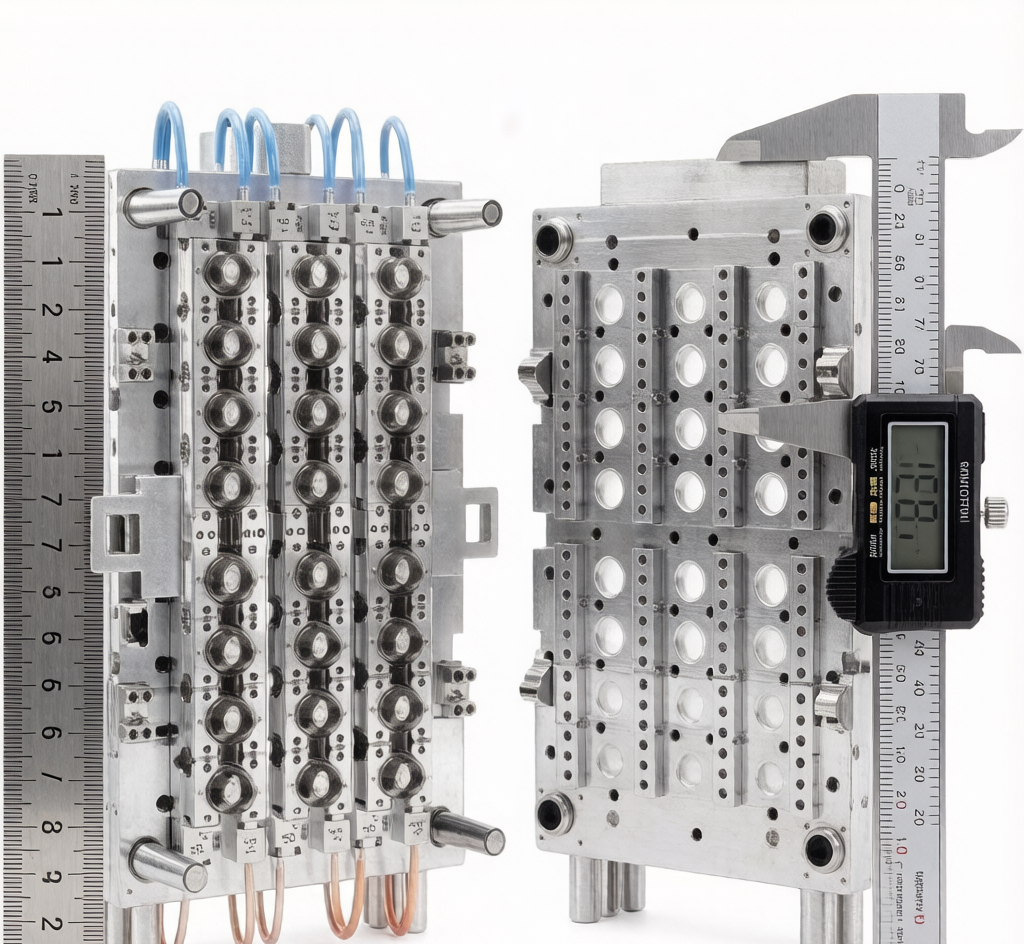
SHENGQI verifies these dimensions on CMM and optical comparators before assembly.
Machining Tolerances and Surface Finish
The bushing is usually produced by precision turning of the OD steps, followed by wire-EDM or CNC milling of the helical groove, and final honing of the bore. Typical controls include bore tolerance H7, OD runout ≤ 0.01 mm, and groove pitch cumulative error ≤ 0.02 mm per 100 mm. Heat treatment is generally not required for bronze, but stress-relief tempering of any pre-machined steel mandrel used during cutting is common.
Assembly with Screw-thread Core and Rifling Rod
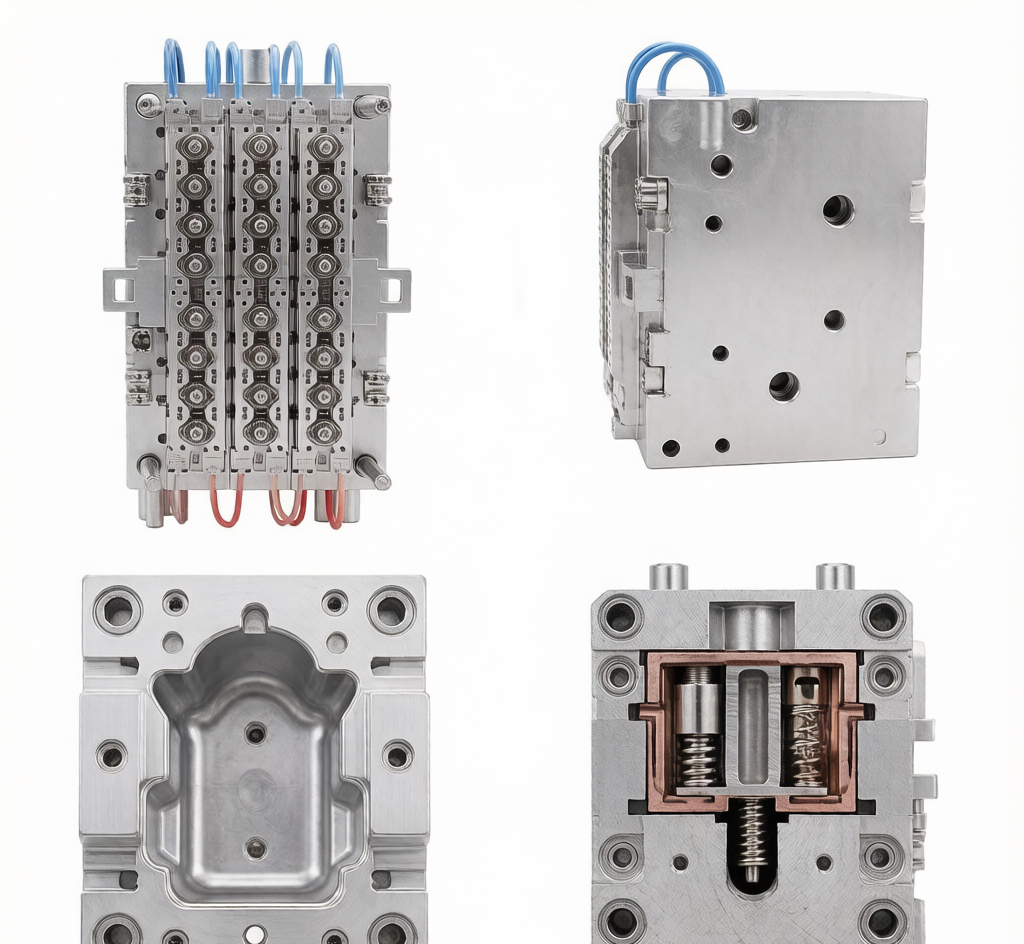
The bushing does not work alone. It is stacked between the fixed cavity plate and the rotating core housing, with the rifling rod (来福杆) passing through its helical groove and the screw-thread core (螺牙型芯) forming the cap’s internal thread. Alignment of all three parts controls thread-parting quality and flash. SHENGQI supplies matched sets on request so that lead, timing and concentricity are kept in one source.
Common Wear Modes and Replacement Strategy
Wear appears first as groove flank polishing, then as localized scoring or increased backlash. A preventive replacement interval—based on cycle count and cap resin abrasiveness—avoids sudden thread-quality failures and protects the core. Keeping spare bushings in stock is far cheaper than emergency core repair or downtime.
Custom Manufacturing at SHENGQI PRECISION
With 21+ years of experience, two production bases totaling 40,000 m², 330+ machining centers and ISO 9001 / ISO 13485 / ISO 14001 certification, SHENGQI PRECISION manufactures custom helical bronze bushings, screw-thread cores and complete cap-mold component sets to customer drawings. We support DFM feedback, material selection, vacuum heat treatment of mating steel parts, and full dimensional inspection. For quotes or DFM review, contact Jason Wong at +86 13652919880 or jasonwong@shengqi.com, or visit www.dgshengqi.com.