Why Macro-Level Inspection Matters for Medical Packaging Moulds
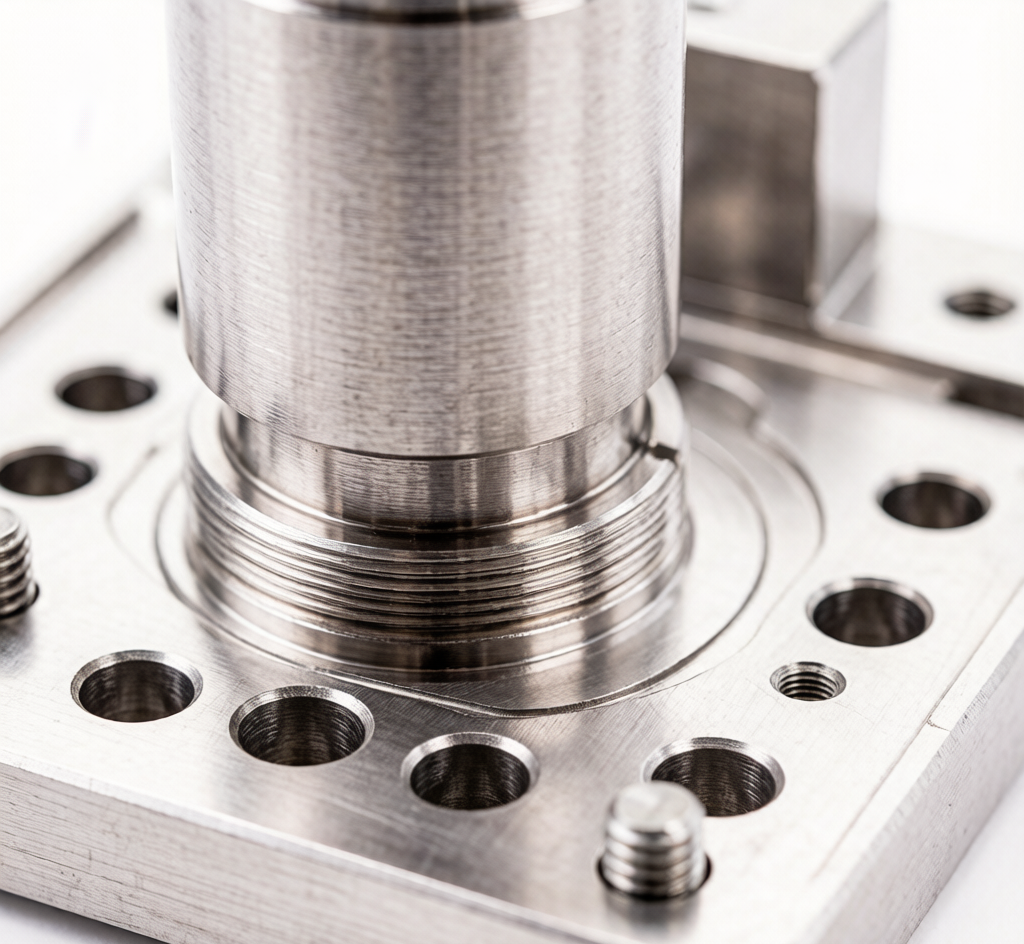
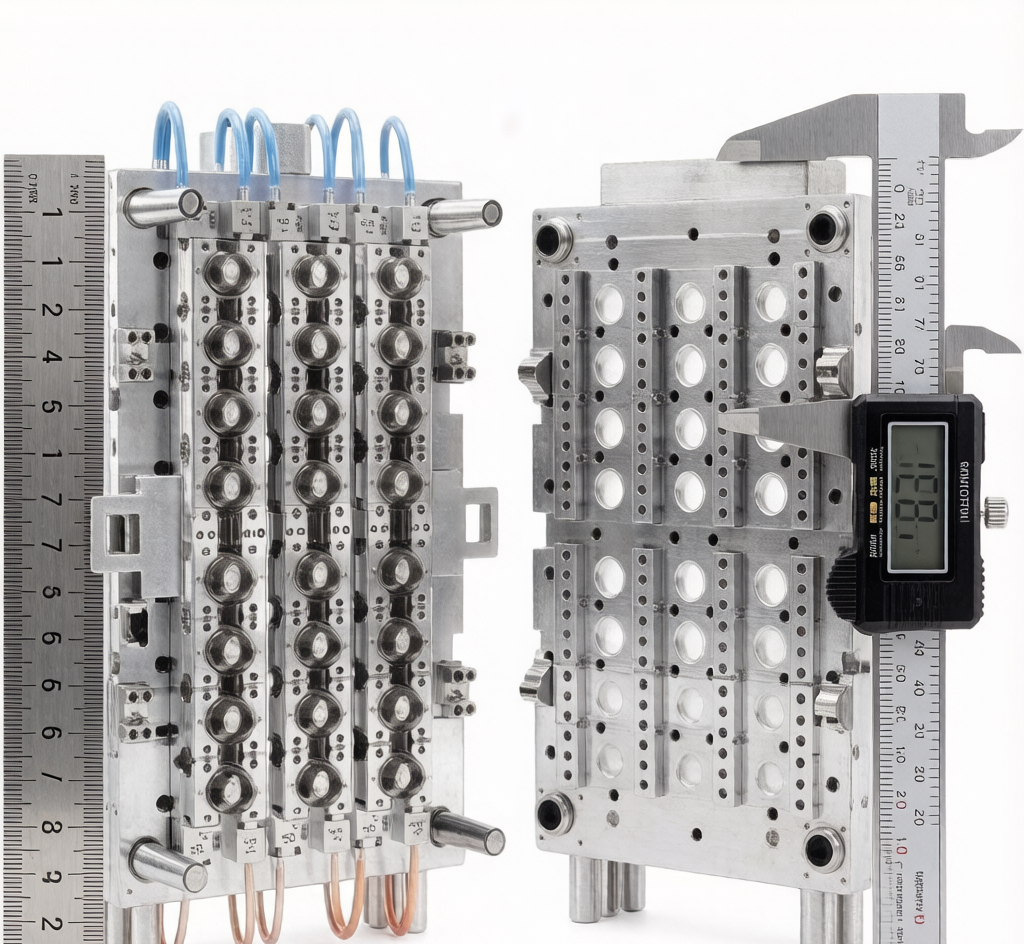
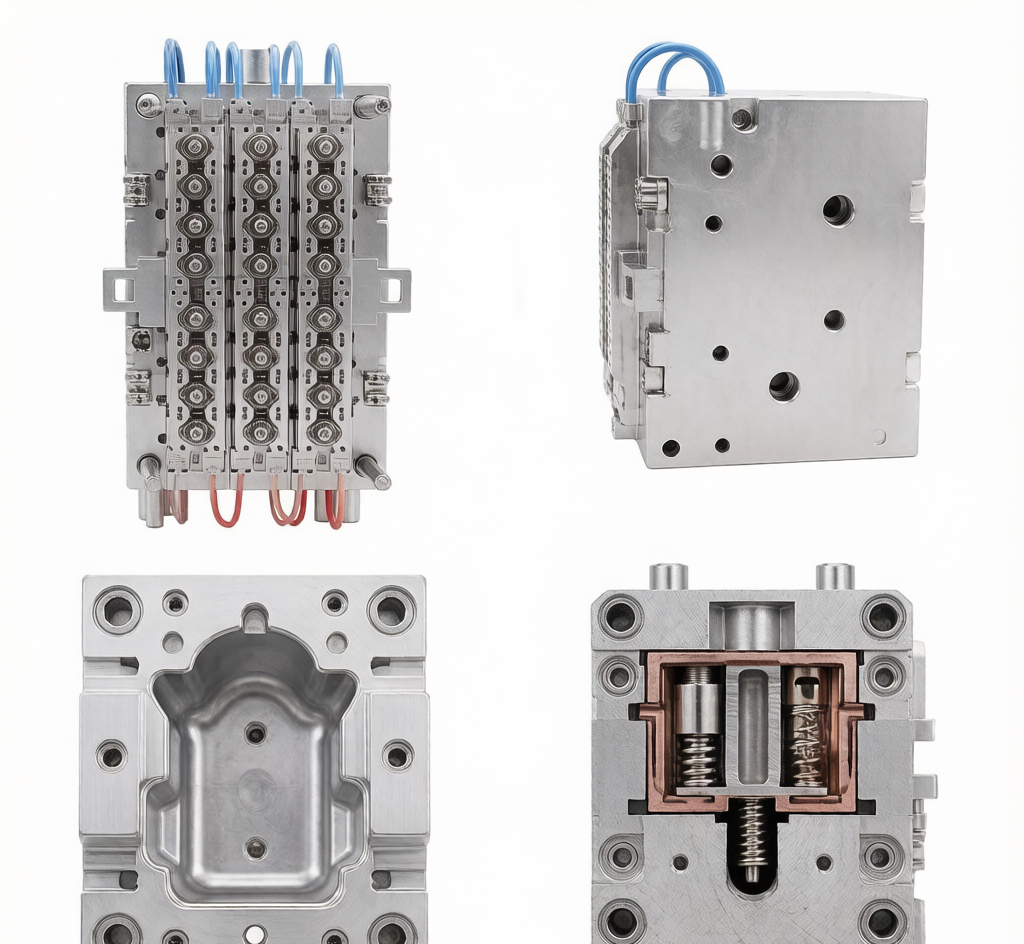
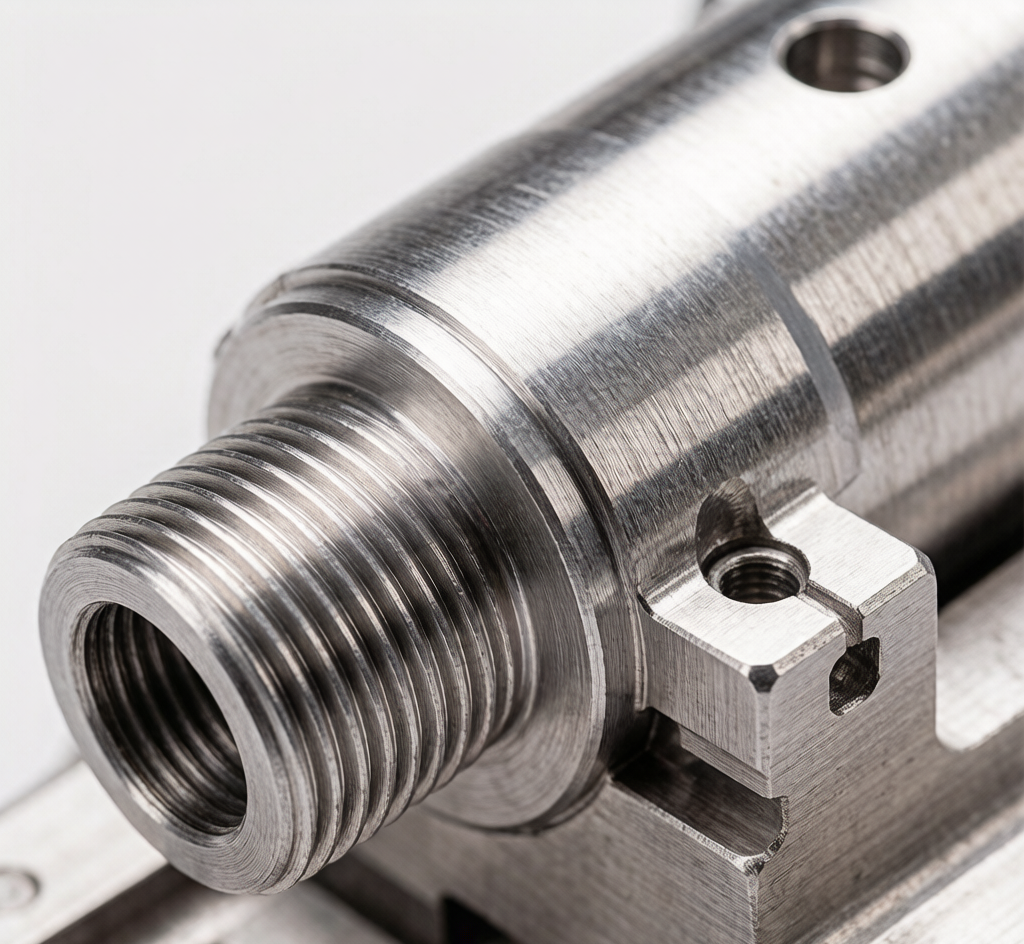
In high-cavity PP preform moulds designed for IV bag hanger integration, the difference between a reliable production tool and one that generates scrap often comes down to details measured in micrometres. The macro detail shot presented here reveals several critical manufacturing features that directly influence mould performance, parting line integrity, and the dimensional consistency of the final preform product.
Thread Precision: The Foundation of Preform Neck Accuracy
The externally threaded section visible in the foreground serves as either the mould component’s mounting interface or, in certain cavity insert designs, the forming element for the preform’s neck thread geometry. In either application, thread pitch accuracy, concentricity relative to the bore axis, and surface finish within the thread roots are non-negotiable specifications.
For medical-grade PP preforms used in IV bag applications, the neck thread must meet tight tolerance bands to ensure proper cap engagement and seal integrity throughout the product’s shelf life. SHENGQI machines these threaded features on high-precision CNC lathes (TAKISAWA, DOOSAN, MAZAK) holding ±0.003 mm positional tolerance, followed by precision grinding to achieve the required surface integrity.
Mirror-Polished Cylindrical Body: Beyond Aesthetics
The main cylindrical body exhibits a consistent mirror finish characteristic of precision ground and polished mould steel. This is not cosmetic — in injection moulding, cavity surface finish transfers directly to the moulded part. For medical packaging components, a superior cavity finish delivers three tangible benefits:
- Reduced ejection force: Lower friction between cavity wall and solidified PP minimises stress on the preform’s thin-wall sections during ejection.
- Consistent optical clarity: For transparent or translucent medical packaging, cavity polish uniformity eliminates visual defects that would trigger quality rejection.
- Easier cleaning and validation: A mirror-finished cavity surface supports GMP-compliant cleaning protocols and reduces microbial adhesion risk — a critical factor under ISO 13485 production standards.
Positioning Block with Keyway: Repeatable Assembly Tolerance
The machined block feature visible on the right side of the component incorporates a tapped hole and a slotted keyway. This is a classic anti-rotation positioning design used extensively in multi-cavity mould assemblies. Its purpose is straightforward but essential: it locks the component’s rotational orientation during mould assembly, ensuring that every cavity in a 24–144 cavity layout produces an identical preform orientation.
Without such indexing features, even minor rotational drift between cavities would accumulate into measurable flash variation and gate imbalance across the mould — problems that become exponentially more significant as cavity count increases.
Material Selection and Heat Treatment for Long-Term Stability
Components at this level of precision are typically machined from SKD61 (H13 equivalent) hot-work tool steel or S136 mirror stainless steel, depending on the corrosion resistance requirements of the specific medical PP grade being moulded. SHENGQI applies vacuum heat treatment followed by stress-relief tempering to eliminate residual machining stresses that would otherwise cause dimensional drift over thousands of injection cycles.
The fine turning marks still visible on the polished surface indicate post-grinding verification — evidence that the component has passed through SHENGQI’s in-house inspection workflow, which includes ZEISS CMM verification (±0.0015–0.0022 mm) and surface roughness testing before mould assembly clearance.
SHENGQI Precision: Your Partner in Medical Packaging Mould Components
Dongguan Shengqi Mould Components Co., Ltd. brings 21+ years of precision mould component manufacturing experience to every project. With 330+ machining centres across two production bases (Dongguan + Huangshi, 40,000 m²), ISO 9001:2015, ISO 13485 and ISO 14001 certification, and a dedicated medical-device clean-room production capability, SHENGQI delivers the consistency that medical packaging OEMs require.
From DFM review and mold-flow analysis through precision machining, surface treatment and full CMM inspection, SHENGQI provides a one-stop solution for custom non-standard mould components — including high-cavity PP preform moulds for IV bag hanger integration and the full spectrum of medical consumable mould parts.
Contact: Jason Wong | Email: jasonwong@shengqi.com | Tel: +86 13652919880 | Web: www.dgshengqi.com