Introduction: The Growing Demand for Integrated Medical Packaging Solutions
As global healthcare systems expand their reliance on intravenous (IV) therapy, the demand for reliable, cost-effective IV bag packaging has surged. A critical but often overlooked component in this supply chain is the preform mould that produces the bottle hanger or suspension feature integrated directly into the IV bag’s neck finish. Unlike conventional PET preforms used for beverage bottles, these medical-grade PP preforms must meet stringent dimensional tolerances, biocompatibility requirements, and sterile-packaging compatibility — all while supporting high-volume production rates.
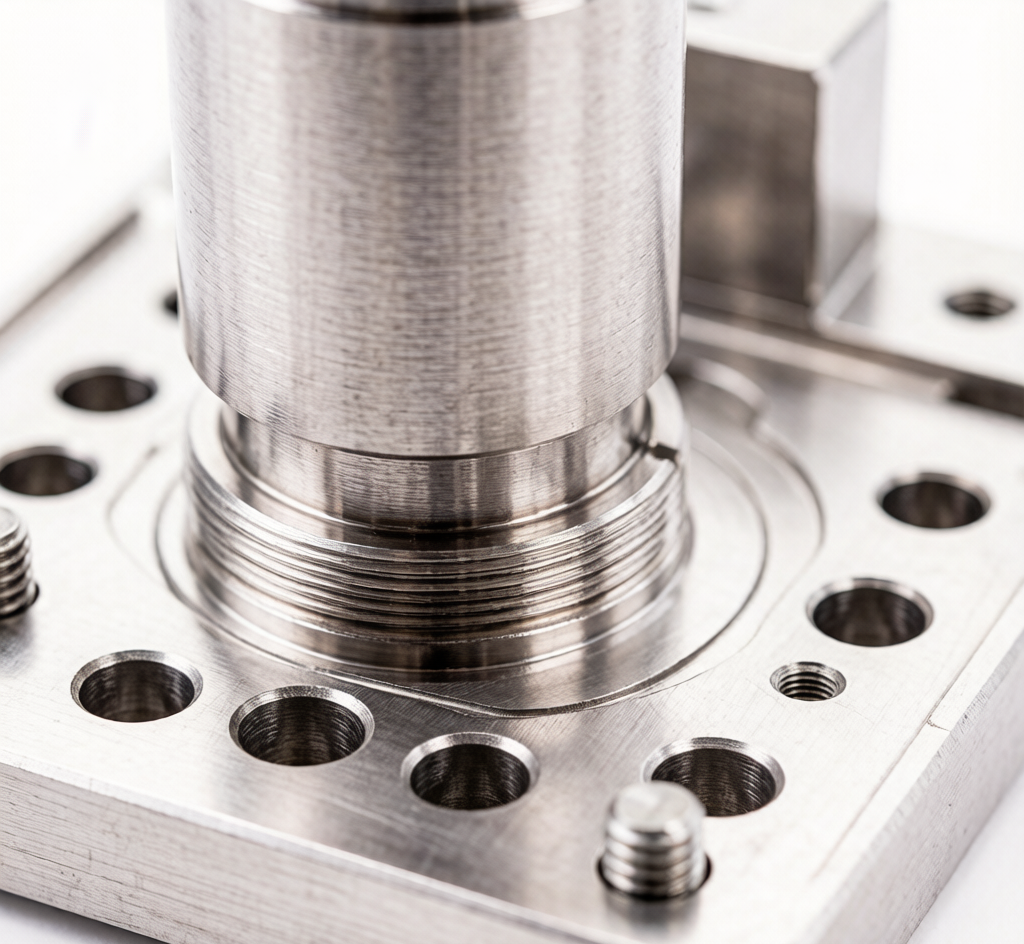
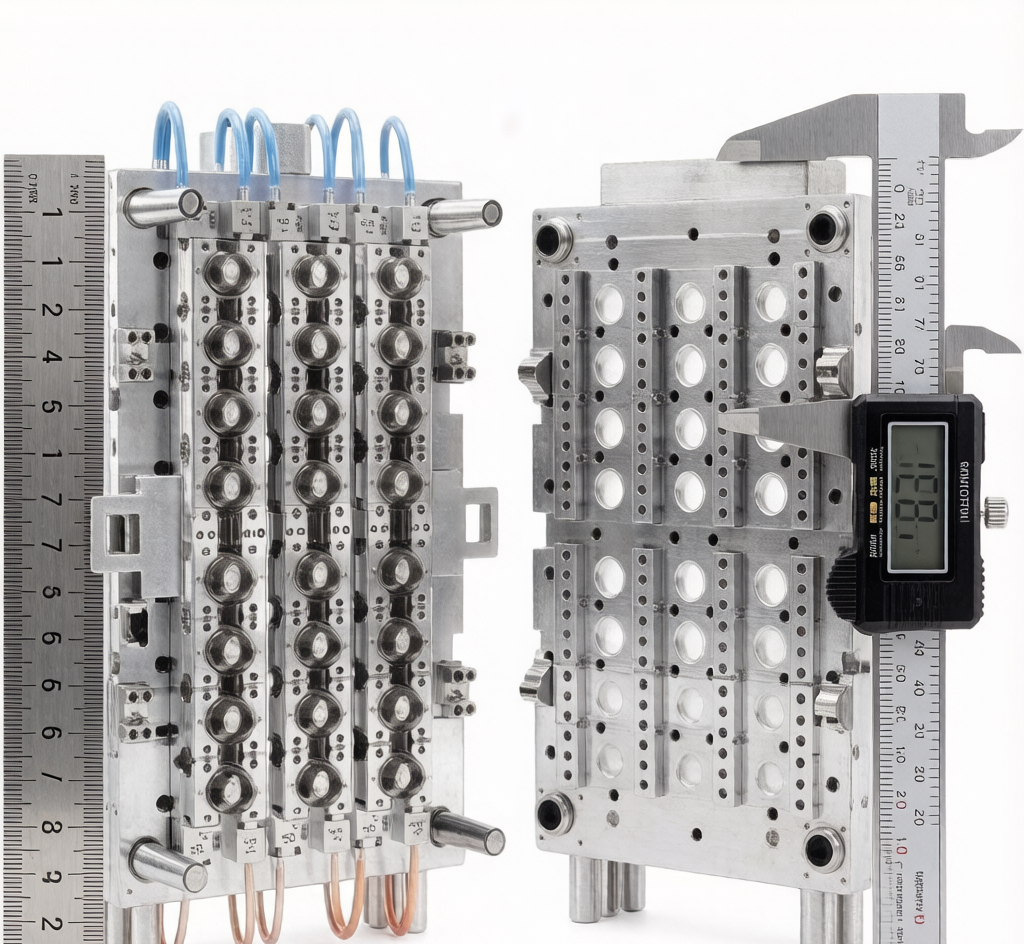
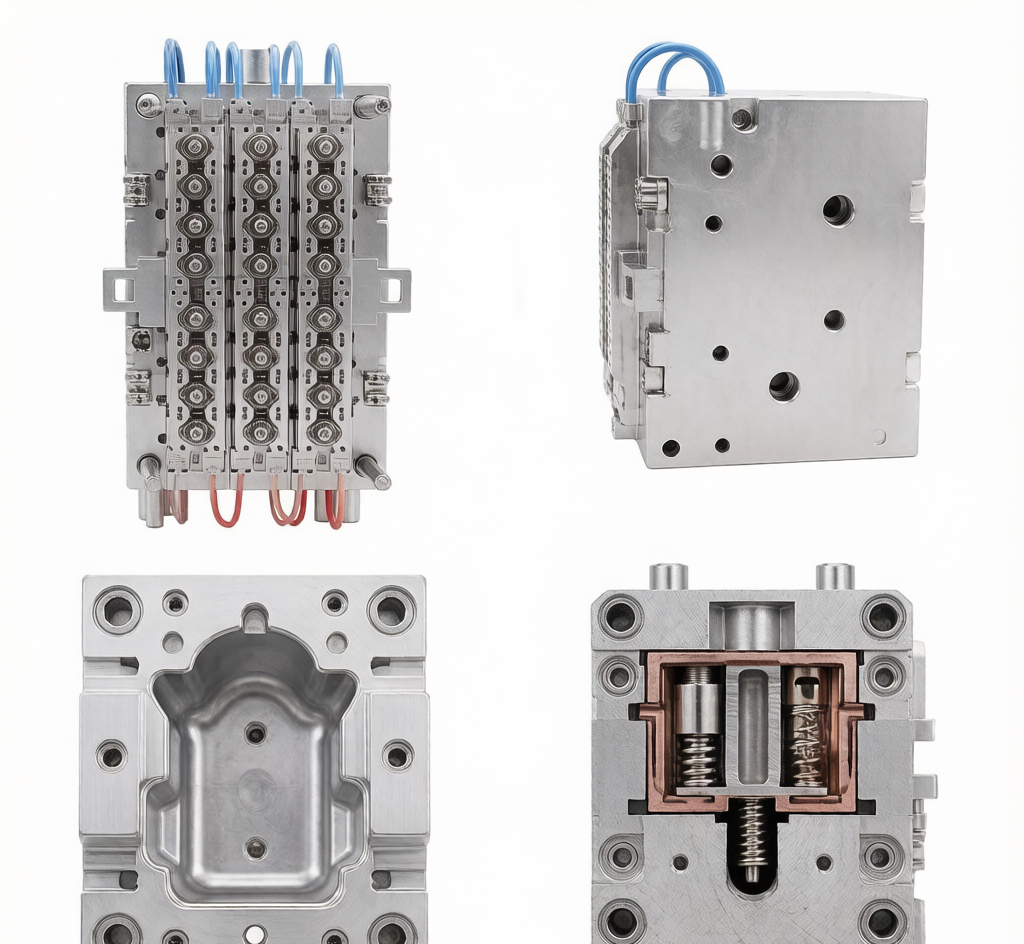
At SHENGQI PRECISION, we specialize in designing and manufacturing custom non-standard mould components for exactly this type of application. The mould shown below is a high-cavity PP preform mould engineered for producing IV bag hanger-integrated preforms, typically configured from 24 to 144 cavities depending on output requirements.
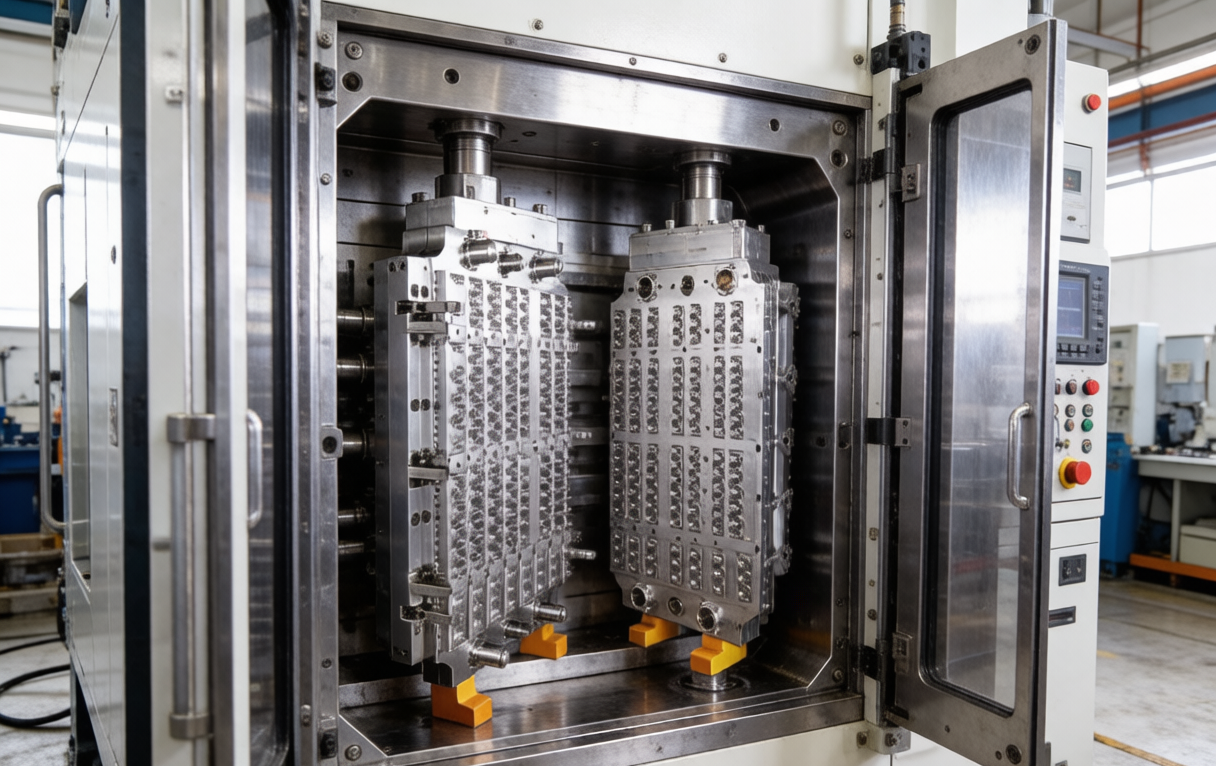
What Is an IV Bag Hanger-Integrated Preform Mould?
An IV bag hanger-integrated preform mould is a specialized injection mould that forms a polypropylene (PP) preform featuring a built-in suspension hook or hanger geometry at the neck area. This design eliminates the need for secondary assembly operations — the hanger is molded as one piece with the preform body, which is later blow-molded or thermoformed into the final IV bag container.
Key functional requirements include:
- Precise hanger geometry: The hook profile must be dimensionally accurate to ensure reliable hanging on IV stands without deformation under load.
- Tight neck tolerance: The finish must accept standard IV closure caps with consistent torque performance.
- Cavity-to-cavity uniformity: In high-cavity configurations (48+, 72+, 96+ cavities), weight variation between cavities must be minimized to ensure consistent downstream processing.
- Medical-grade material compatibility: Mould surfaces must be polished to mirror finish where contact occurs with the preform, preventing contamination and ensuring easy release.
Core Technical Challenges in High-Cavity Medical Preform Mould Design
Designing a multi-cavity preform mould for medical applications presents several engineering challenges that distinguish it from commodity-grade packaging moulds:
1. Balanced Hot Runner System
A hot runner system with meticulously balanced flow channels is essential. Uneven filling leads to cavity weight variation, which in medical packaging translates to inconsistent wall thickness and potential failure points. Our hot runner designs utilize flow simulation (moldflow analysis) during the DFM phase to optimize runner geometry, gate location, and thermal profile before steel is cut.
2. Core Pin Precision and Surface Finish
The core pins that form the internal geometry of each preform cavity are among the most critical components. For IV bag preforms, core pins must maintain cylindricality within ±0.003 mm over their full working length, with a mirror-polished surface (Ra ≤ 0.1 μm) to prevent sticking and enable consistent ejection. We manufacture these core pins in-house using our fleet of SODICK mirror-finish EDM machines (25 units) and wire-cutting machines (CHARMILLES / GF+, 10 units), all operating within ±0.003 mm accuracy.
3. Thermal Management Across Large Mold Bases
High-cavity moulds generate significant heat during continuous operation. Without effective cooling channel design, thermal expansion can cause cavity misalignment and flash formation. Our moulds incorporate conformal cooling strategies optimized through thermal simulation, ensuring stable cycle times even during extended production runs.
4. Material Selection: SKD61/H13 with Vacuum Heat Treatment
Mould cavities and cores are machined from SKD61 or H13 hot-work tool steel, followed by vacuum heat treatment to achieve a hardness of 48–52 HRC. This combination provides excellent thermal fatigue resistance — essential for moulds that may cycle millions of times over their service life. Post-treatment, all critical surfaces undergo precision grinding on our OKAMOTO / KENT grinding machines (63 units) to achieve the required flatness and parallelism.
Quality Assurance: ISO 13485 Certified Manufacturing Process
Medical mould components demand a level of traceability and process control beyond standard industrial moulds. At SHENGQI PRECISION, our manufacturing process for medical preform moulds operates under our ISO 13485 (medical device quality management system) certification, complemented by ISO 9001:2015 and ISO 14001.
Key inspection checkpoints include:
- CMM verification of cavity dimensions using ZEISS and HEXAGON coordinate measuring machines (±0.0015–0.0022 mm accuracy).
- Surface roughness testing on all core pin and cavity insert surfaces.
- Ejection force testing to validate release characteristics without part deformation.
- Full dimensional report provided with every mould shipment for customer QA records.
Why Partner with SHENGQI for Your Medical Preform Mould Project?
With 21+ years of experience in precision mould component manufacturing, two production bases totaling 40,000 m², and over 330 machining centers covering CNC milling, turning, grinding, EDM, and wire-cutting, SHENGQI PRECISION offers end-to-end capability from DFM review through final inspection and delivery.
Our track record includes long-term partnerships with leading medical device manufacturers such as Weigao and Mindray, validating our ability to meet the most demanding specifications in medical consumable moulding.
Contact us to discuss your IV bag preform mould requirements:
- Jason Wong | +86 13652919880 | jasonwong@shengqi.com
- www.dgshengqi.com