Introduction: Why the Three-Piece Cap Dominates Daily-Chemical Packaging
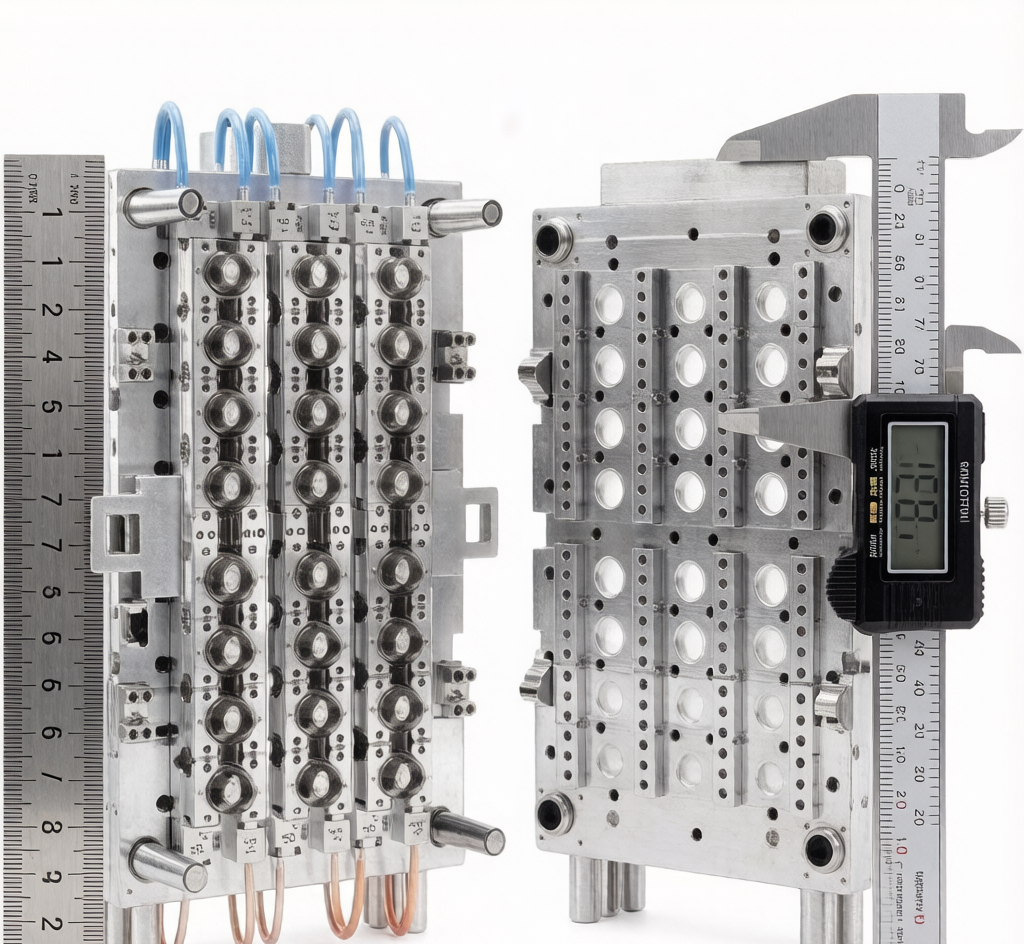
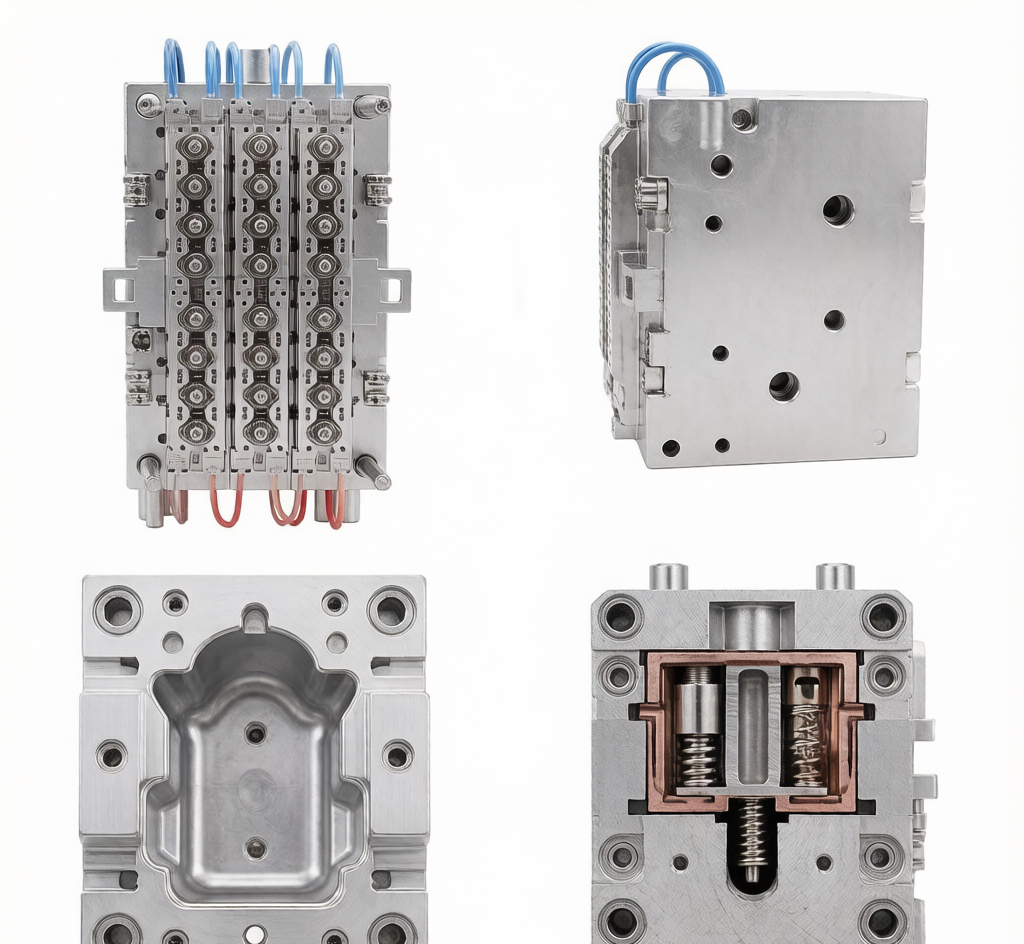
In shampoos, body washes and laundry detergents, the three-piece cap has become the default choice for mid- to high-end closures thanks to its structural stability, pleasant opening feel and reliable sealing. Yet building one mould that simultaneously guarantees thread-forming accuracy, synchronized three-piece ejection and multi-cavity consistency places extreme demands on the precision of the mould components.
This article breaks down the core technical points of three-piece cap moulds from the component perspective, helping buyers and engineers understand the key decisions behind custom non-standard tooling.
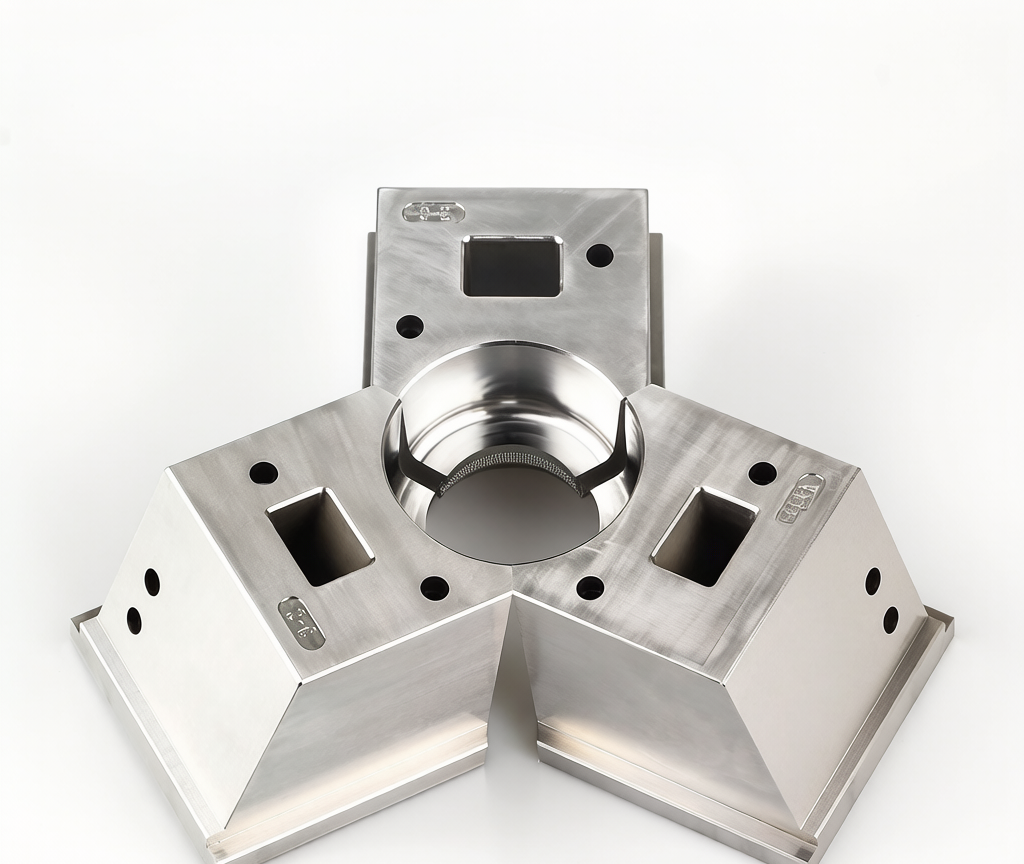
1. Technical Advantages and Design Challenges of the Three-Piece Structure
1.1 Why ‘three pieces’ instead of a single body?
A conventional one-piece cap mould forces the part off the core during ejection, which can damage the thread or deform the cap. The three-piece structure uses slider parting: on opening, the three segments slide apart and the cap releases naturally — protecting thread integrity and drastically cutting ejection resistance, which suits high-speed injection lines.
1.2 The critical difficulty: three-piece synchronization
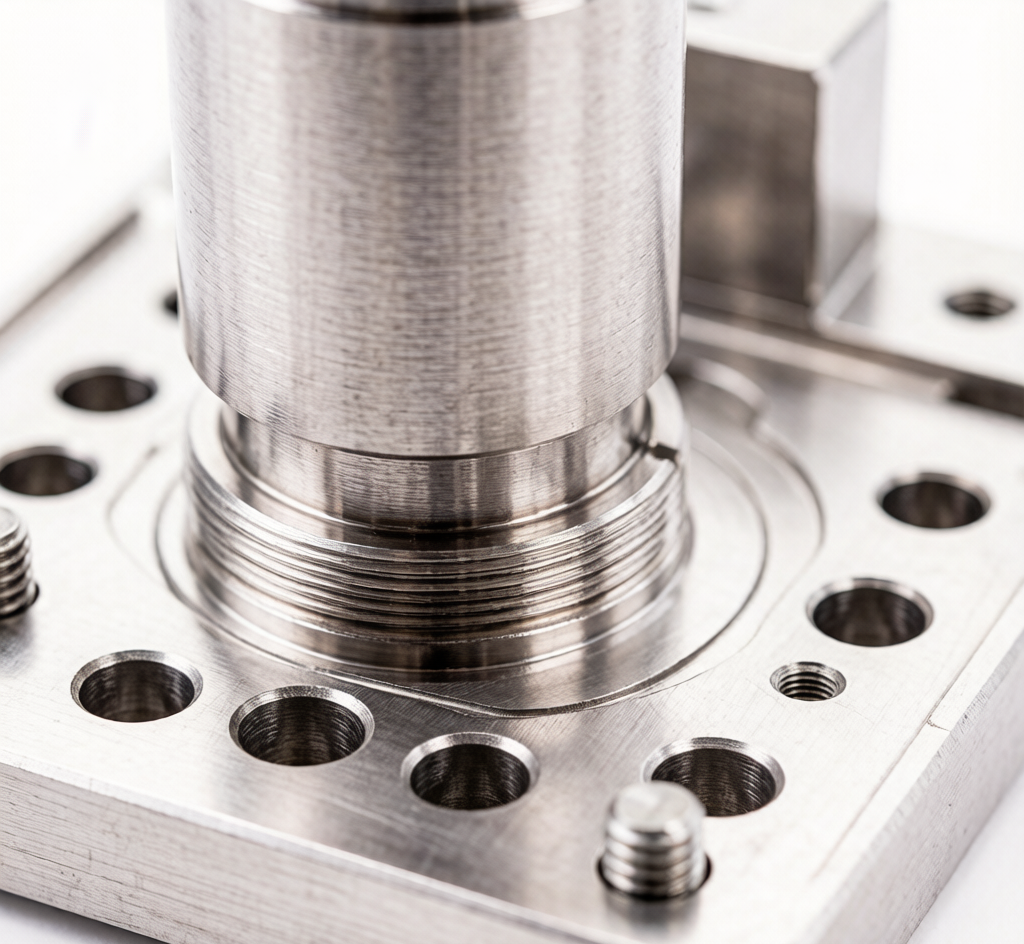
The key metric is the coaxiality of the three segments when closed. A micron-level misalignment produces visible parting lines and poor thread engagement. This requires guide components such as the tapered sleeve (锥孔推板套) to achieve a fit tolerance of around ±0.002 mm.
2. Material and Process Selection for Key Components
| Component | Recommended material | Surface treatment | Life expectancy |
|---|---|---|---|
| Cavity | P20 / 718H | Mirror polish + nitriding | 500k–800k shots |
| Core (thread) | SKD61 / S136 | Precision thread grinding + Ti-coating | 300k–500k shots |
| Slider guide | SKD61 | Nitriding + grinding | Aligned with cavity |
3. Common Issues and How SHENGQI Handles Them
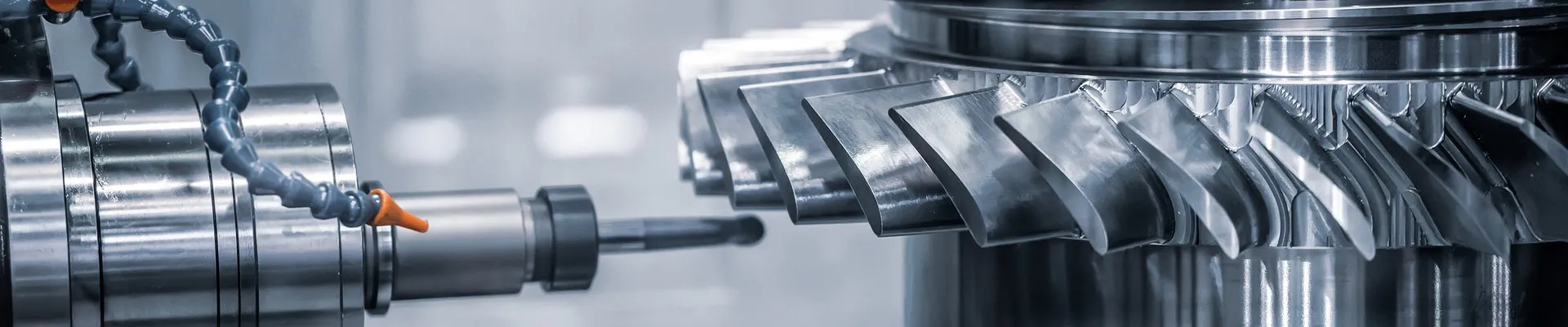
Thread seizing, parting-line flash and inconsistent torque across cavities are the usual complaints. SHENGQI PRECISION controls them at the source: precision thread grinding on SKD61/S136 cores, taper-sleeve guidance held to ±0.002 mm, and a full-process chain from DFM and mold-flow analysis to CMM inspection. With 21+ years of experience, two production bases (Dongguan + Huangshi, 40,000 m²), 330+ machining centers (MAKINO, MAZAK, SODICK) and ISO 9001 / 13485 / 14001 certification, the company supplies international-standard components compatible with MISUMI, DME, HASCO and FIBRO systems.
Looking for a reliable three-piece cap mould components partner? Contact SHENGQI PRECISION — Jason Wong, +86 13652919880, jasonwong@shengqi.com, www.dgshengqi.com.